State sponsorship of militant groups can backfire when those groups turn against their patrons, as demonstrated by Pakistan's experience with ISIS-K, which the Afghan Taliban has now targeted with cross-border strikes. This illustrates the principle that nations cannot cultivate terrorist organizations and expect them to remain loyal assets indefinitely.
Install our extension to search inside any video instantly.
Taliban Bombs Pakistan's Terror Camps | Vantage on Firstpost
Added:Hello and welcome to First Post Vantage with me Horsoya. Let's get started.
Trump just got trumped. A single photo op that is now fullblown transatlantic diplomatic spat. Trump's booze did not land. Georgia Maloney is not having it.
But what really happened? I'll tell you in just a bit. Talking of crash landing, the Indian stock market woke up to a harsh reality check. What happened there? I'll explain in just a bit.
I've said it before and I'll say it again. You cannot foster snakes in your backyard and hope they don't bite you.
Pakistan is learning this the hard way.
Serves them right. Stay tuned for the report on the Frankenstein state. On the 21st of June, India will conduct the neat UG 2026 re exam and the Indian government is taking extraordinary measures. After all, there's a lot riding on this one. The pandemic popularized work from home and many of us embraced it with open arms. However, mental health has handed the bill and it's not looking good. Are we working ourselves into oblivion? I'll tell you about the hidden cost of remote work.
All this and more lined up, but first the headlines.
The United States says Israel and Hezbollah have agreed to a ceasefire.
This comes after deadly new exchanges in Lebanon put the fragile deal to end the West Asia war under strain. Today, Israeli air strikes and bombardments killed at least 47 people in Lebanon.
Mediators in the US Iran conflict including Pakistan, Saudi Arabia and Turkey are due to meet for talks in Egypt on Sunday. The gathering would bring together the foreign ministers of these countries. They last met in April on the sidelines of a diplomatic forum in Turkey.
Veteran UK Labor politician Andy Bernham wins a crunch bi-election. This clears the way for his expected bid to oust belleaguered Prime Minister Kama. The 50 uh the 56 year old, pardon me, longtime figure in Labor wants to replace Tama as party leader and prime minister.
Indonesia will suspend its free meal scheme during holidays. This comes after mass protests in the capital that condemned the wasteful spending. The multi-billion dollar feeding program is one of President Praova Subanto's signature policies, but it has been widely criticized for its high costs.
And scientists say the Earth may not be engulfed by the expanding fireball of the dying sun. This has long been assumed to be our planet's ultimate fate. But the two planets closest to the sun, Mercury and Venus, will eventually be swallowed by the fireball.
Oh my.
It's Friday night and while most of us are winding down, geopolitics has other plans. A transatlantic diplomatic rift is breaking wide open. It has been triggered by a very public spat between US President Donald Trump and Italian Prime Minister Giorgio Maloney. It all began yesterday when Trump said Maloney begged him for a photograph. His comments have Italy up in arms. And now Maloney has fired back. Listen to this.
Time for a quick backstory. Let's start with what he said. On Thursday, Trump spoke to an Italian TV channel. It was a phone interview and Trump made an extraordinary claim. Trump said Maloney wanted a photo with him. Not just wanted it. He claimed she begged for it. Trump said she wanted the photo very bad.
Listen to his exact words.
>> She begged me to take a picture with her. She wanted a picture with me so badly. I wouldn't have taken it, but I felt sorry for her.
And he didn't stop there. Trump suggested Maloney should be happy just because he spoke to her. But that version of events did not last long.
Meloney responded and did so directly.
Maloney did not want to swallow this insult. She sent it right back with interest.
>> Well, some things deserve an immediate response. Donald Trump's statements are completely made up. I am frankly astonished. I don't know why the president of the United States behaves like this towards his allies.
A declaration. She did not just correct the record. She drew a line and marble.
And this is the part that should not be glossed over. This is no longer a war of words on television. Italy's foreign minister Antonio Thanani. He was supposed to visit Washington on the 21st of June and the 22nd. That trip is no longer happening. Theani canled it completely. He called Trump's remarks grave and offensive. He said that they did not just insult Georgia Maloney, they insulted Italy, all of Italy. The Italians are not known for losing their temper easily. Laidback, unflapable, the kind of people who let most things slide. Not this time. Remember this is a NATO country calling out a sitting US president in public and then cancelling a high level visit all over the way its prime minister was spoken to. So Rome wasn't just expressing displeasure.
It was making a point loud and clear.
And this isn't just about Maloney. This is a pattern. The Italian prime minister sees it herself.
I can only say it is disappointing that he does not show the same determination with the enemies of the West and of the United States whose leaders he instead treats with far greater indulgence.
And do you know what's more surprising?
What this episode has done? It has blurred Italy's political divides. This is no longer a left versus right story.
Even Maloney's opponents are backing her, including a man who rarely misses a chance to attack her. Former Prime Minister Mateo Reni, he called Trump's remarks horrifying and his bottom line was the same as Maloney's. Italy deserves better than this. To understand why this hit so hard, you have to go back a little. Because Georgia Maloney was not just another European leader, at least not in Trump's eyes. For years, she was seen as his closest ally in Europe. They spoke the same political language, nationalism, conservatism, and a skepticism of the old establishment.
Trump did not hide his admiration. He once called Maloney a fantastic woman.
The two met repeatedly. They dined together in Paris alongside Elon Musk.
Maloney even visited Mara Lago before Trump returned to office. That is not something most world leaders get to do.
In fact, if you had to name one European leader who had Trump's ear, most fingers would have pointed to Maloney. She wasn't just a partner. She was the favorite until April. And that is where the story took a turn. Pope Leo criticized Trump's threats against Iran.
He called them truly unacceptable.
Trump did not take that lightly. He fired back hard directly at the Pope. He called him weak on crime and terrible for foreign policy.
Then came the part that really stung.
Trump told the pope to focus on being a great pope and not a politician. Now that put Maloney in a very awkward position. She's a devout Catholic. She leads the country that hosts the Vatican. And she could not pretend she hadn't heard it. So Maloney spoke up.
She called Trump's comments unacceptable.
Because for the first time, Maloney wasn't defending Trump. In return, Trump accused her of lacking courage on Iran, of failing to help the United States within NATO. He even threatened to pull US troops out of Italy. The woman he once called fantastic was now, in his own words, unacceptable.
And Maloney wasn't the only one catching the heat. Trump was spreading the love, or rather the lack of it, to everyone around his orbit. At the G7, he scolded Benjamin Netanyahu earlier this month.
He called him crazy, used crude language, and even said there would be no Israel if it were not for him.
Netanyahu did not push back, not publicly, not directly. This is not new behavior from Trump.
He needles allies in public. He demands gratitude for support he provides. He treats partnership as a debt owed to him personally. The need to be seen as the one being chased, never the one doing the chasing.
There's an old saying about waking a sleeping lion. Rome hasn't been asleep.
It has simply been polite. Today, that politeness was in short supply. The G7 smiled for the cameras moved on. But Georgia Maloney, she is not everyone.
She is not one to take insults lying down.
Even when it comes from the US president, Trump is used to having the last word, but not tonight. He has berated other leaders, ridiculed them. They've smiled, moved on. The men stayed quiet. They waited for the next photo opportunity.
But this time, Trump dared a woman.
Never a wise move, I would say.
Maloney answered Trump in a language he understands, called him a liar, called out his bullying of allies. This is what it looks like when chauvinism meets a woman who refuses to play along.
Now, how will Trump respond?
If the US president is listening, I would urge caution because hell has no fury like a woman wronged.
Remember the magical feeling on salary day? Your account gets credited. You feel rich.
This is what happened when investors in India and worldwide this week as the US and Iran inched closer to a peace deal and finally signed an agreement to end the monthsl long war. Portfolio screenshots were flying on family WhatsApp groups. That one friend of yours who bought the dip could not shut up about his masterclass on wealth creation. Influencers suddenly became Warren Buffett with a Wi-Fi connection.
But the party did not last long because after five straight sessions of gains, the Indian stock market woke up to a harsh reality check today. The Sensex closed at over 600 points down. The Nifty50 stood at 24,000.
Now these are the two most important stock market indices in India. Sensex is the benchmark index of the Bombay Stock Exchange or the BSE. Think of it like a scoreboard. Sensex tracks how 30 of India's biggest companies are doing.
When it falls 600 points, it means those companies in simple terms just had a very bad morning. How bad? The total value of all listed companies on the BSC. Think of it as the combined price tag of Indian corporate fell by 1.3 trillion rupees or 15 billion dollars. This five session winning streak that had lifted markets nearly 5%. Wiped out partially.
Similarly, the Nifty50 is the benchmark index of the National Stock Exchange, the NSC. This index tracks 50 largest companies in India across various sectors. Almost all top losers of the day on Nifty50 today are IT companies.
So what happened? One word. Well, one company, Accenture. Accenture is a global consulting and technology giant.
So the decisions it makes affects markets around the globe and what Accenture did on Thursday was not good news. The tech giant narrowed its fullear growth forecast trimming the upper end of their guidance from 5% down to 4%. Meaning the company forecast that its revenue might not increase at the same pace as it had thought before. More importantly, Accenture's management said something that cut right through the AI hype. Clients are not spending more money on technology. They are just moving money around. And this hit investor sentiment.
And why not? For the last few years, the promise has been that artificial intelligence would trigger a massive new wave of tech spending. Companies would open their wallets. IT firms would rake it in. Everyone would win. Accenture just said that's not happening. Instead of increasing budgets, companies are taking their existing tech money and redirecting it towards AI. The overall pie hasn't grown, it's just been recut.
For Indian IT giants, TCS, Infosys, Whipro, Tech Mahindra, this was a cold shower. Their stocks closed between 3 and 6%.
There was one more number that stood out. Accenture's outsourcing bookings the contracts where companies hand over their operations to a service provider.
For Accenture, it fell 15% compared to last year. Now outsourcing is not a side business for India's IT sector. It is the backbone. It's the bread and butter.
If global companies are pulling back on outsourcing deals, Indian IT firms don't just feel that chill, they catch the cold. The pain wasn't contained to Mumbai. On Wall Street, Accenture's own shares crashed more than 17%. Cognizant fell over 10%. Now, Accenture lit the match, but the market had plenty of dry tinder ready. Foreign investors turned sellers again. After three sessions of buying into Indian markets, foreign institutional investors, essentially large global funds turned around and sold Indian equities worth over,000 cr rupees on Thursday.
And these are big players too.
when they exit, others notice. Profit booking was also overdue. You see, markets don't move in straight lines.
After a 5% run up in 5 days, driven largely by relief over the US Iran peace deal, traders were sitting on healthy gains. Friday gave them a reason to sell. Think of it like this. If you bought a stock at 100 rupees, watched it go to 105 rupees in a week, and then a negative headline hit, you're not going to wait to see if it falls further. You book your profit and exit. Multiply that logic by thousands of traders and you get a selloff. And then there's another reason. West Asia refused to behave. The United States Iran deal may be signed, but geopolitical risk don't expire on signature day. Fresh Israeli strikes in Lebanon. Questions about ceasefire durability. JD Vance's comments on regional dynamics. All of it, all of it kept investors on edge. Crude oil remains the biggest risk. Any renewed instability in the region could push oil prices higher and India which imports nearly 85% of its crude would feel that immediately in its inflation numbers and its current account. Indian stocks spent the week betting on geopolitics. Today it was forced to confront economics and economics is far less forgiving.
Accenture did not crash Indian markets.
It just handed investors a mirror. And what they saw was a 5-day run built on a peace deal, not on fundamentals, on hope, not on earnings, on the relief that a war didn't happen, which if you think about it, is a fairly low bar for optimism.
That's the market's oldest trick. Let you believe the rally is permanent and then remind you sharply that it isn't.
Our next story is about Pakistan. For years, Pakistan operated under the illusion that it could control the militants. Its security establishment really thought that it could distinguish between good militants and bad militants. They really thought militants could be used as assets and kept under control. Today, Pakistan's hubris is meeting its reality. It is watching the very militant ecosystem it helped nurture turn its guns on it. And today the Afghan Taliban bombed positions of the jihadist group Islamic State inside Pakistan. The same group that Pakistan once cultivated for strategic depth in Afghanistan. The same group that is now accusing Pakistan of allowing ISISK operatives to use its territory.
In a series of strikes on Friday, the rulers of Kabul have bombed positions in Pakistani provinces of Kaibar Paktuma and Balojasthan.
The Taliban government's defense ministry said in a post on X that hideouts in Pakistan's two provinces, both of which share a border with Afghanistan had been targeted by Afghan air force.
This was on Thursday night. Embarrassed, Pakistan swiftly rejected these charges.
But the strikes come just days after Pakistan launched deadly strikes on Afghanistan.
Now I did not specify how the attacks happened which is Kabell's first major offensive action in months. We don't know how they were carried out.
Afghanistan has no fighter jets but data from Londonbased International Institute for Strategic Studies says that it possesses at least six aircraft and 23 helicopters. The Taliban forces are also known to have drones that have been used in fighting with Pakistan. In a statement, the Afghan Defense Ministry said, and I'm quoting here, "These bases, allegedly used in cooperation with certain hostile intelligence circles to plan and organize attacks against Afghanistan, had previously served as staging grounds for several deadly attacks.
According to the preliminary information, the operation successfully hit its key pre-desated targets.
Pakistan's information ministry denied the Taliban assertion saying that a rudimentary drone from Afghanistan had entered Pakistani airspace but was immediately identified and shot down.
But one must pay close attention to the statement of the Afghan Taliban government. But Pakistan has been carrying out strikes against Afghanistan, killing hundreds of people this year. In fact, just last week, Pakistan launched air strikes on Afghan provinces, which the Afghan Taliban said killed at least 13 people, including 11 children and injured 14 others. Pakistan strikes Afghanistan and also blames Kabul for harboring militants that it says plot attacks in Pakistan.
So what does the Afghan Taliban say?
They have denied these allegations. They say militancy is Pakistan's internal problem. But to really understand the story, you need to understand ISIS K.
ISIS K or the Islamic State Karasan Province is one of the Taliban's deadliest enemies. The two groups may both be Islamist militant movements, but they have been at war for years. ISISK rejects the Taliban's rule over Afghanistan and accuses it of abandoning global jihad and compromising with regional powers. The Taliban in turn sees ISISK as a direct threat to its hold on power. Suffice to say, the Taliban and the ISISK are bitter enemies and their war against each other has been every bit as brutal as their war against others. Remember in August 2021 dur during the United States hasty withdrawal from Afghanistan, an ISIS case suicide bomber attacked the Kabul airport. More than 170 Afghans were killed along with 13 American service members. Since then, ISISK has repeatedly targeted Taliban officials, moss, minority communities, and government buildings across Afghanistan.
pressure.
>> Now, for years, ISIS K operated primarily inside Afghanistan. After the Taliban returned to power in 2021, Kabul launched an aggressive crackdown on the group. Under pressure, many ISISK operators are believed to have moved across the Duran line, separating the two countries into Pakistan's remote border regions, especially Baloistan.
And investigators have linked ISISK networks based there, to some of the group's most notorious international attacks, including the Kerman bombings in Iran, which killed at least 95 people.
Also the Moscow concert hall massacre which killed more than 140 people.
And that is precisely why Islamabad has a problem because Pakistan is caught in the middle of a war between two of the most dangerous jihadist movements in the region. But Pakistan is also complicit in this. It is its own policy of harboring terrorism that has enabled and emboldened terror groups. Experts say it is difficult to believe Pakistan security establishment is unaware of ISISK's growing presence in Balojasthan.
In fact, they say Islamabad is giving safe haven to ISKP network in order to maintain leverage over the Taliban government in Kabul. History has shown that Pakistan's policy of distinguishing between good and bad militants has backfired. It's no secret even Pakistan's defense minister Kuaja Muhammad AF has openly admitted that his country has been backing, training, funding terror groups for over three decades. And that is why today's air strikes are so important because if the Taliban is now willing to conduct crossber strikes on ISISK targets inside Pakistan, it is holding up a mirror to Pakistan security establishment and it has exposed to the world now that Pakistani Frankenstein's monster is no longer under its control.
There is an old story about a scientist who creates a monster. He pours everything into it. Time, resources, ambition, and then the monster turns on him. and he's shocked, horrified. How could this happen? Well, ask Pakistan.
Because India just walked into the United Nations and said the quiet part out loud. New Delhi branded Islamabad the Frankenstein state. The remark was made by Anupama Singh. She's the first secretary at the permanent mission to the United Nations and she said it at the United Nations human rights council or the UNHRC on Thursday and rightly so because she was calling out a country whose sitting defense minister boasts of hosting, training, deploying terrorists and yet has the audacity to call itself a victim of terrorism. Now let me give you some context here. Last year Pakistan's defense minister Kuaja Af made an extraordinary admission. He acknowledged that Pakistan had backed and trained militant groups for decades.
And let me remind you that this admission came in the wake of the Pelgam terror attack in Jammu and Kashmir that claimed 26 innocent lives.
What was ass's justification?
Pakistan was doing the dirty work for the West. Translation, we created a problem, but technically we were subcontractors.
That explanation may work in a corporate meeting, not in geopolitics. Pakistani governments and diplomats are frequently argued in international forums that the country has suffered heavily from attacks by groups such as the Taliban Pakistan and other terror organizations operating within or across its borders.
Hypocrisy would be a done and dusted word at this point.
For Pakistan, the Oxford dictionary may need a new entry. Pakistan now the rare ability to be the problem the victim the witness all of it at once well if you openly admit to raising a monster at least don't expect it to worship you and this is what India called out at the UNHRC this is the country where the sitting defense minister boast of hosting training and deploying terrorist state policy and yet Pakistan calls itself a victim of terrorism indeed a paradox which only Pakistan could sustain It is a living example of a Frankenstein state which is shocked when its own monster bites back.
>> Now let's talk about Pakistan occupied Kashmir because that's where the second mass slipped. Islamabad has spent decades projecting itself as the great champion of Kashmiri rights. The defender of the oppressed the moral voice at every UN podium and then protests erupted. Demonstrators in Pakistan occupied Kashmir took to the streets over bread, over electricity bills, over wheat subsidies. People demanding the basics of human survival.
Pakistan's response, 16 dead, 40 injured. Communications cut, supply lines blocked. Protesters threw shipping containers into rivers trying to break through military barricades. People so desperate they're tossing containers off bridges while Islamabad lectures the world about Kashmiri dignity.
At the United Nations, the Indian diplomat drew attention to the deteriorating conditions in Pakistan occupied Kashmir.
The ongoing tragedy in Rava, the killing of hundreds of civilians and the brutal crackdown across Pakistan occupied Jammu and Kashmir are the predictable outcome of a system built on forcible occupation and sustained through repression.
Decades of military land grabs, demographic engineering and the denial of basic freedoms have brought matters to a point where even demands for bread, electricity, rights and dignity are met with bullets and brutality.
Anupama Singh also made one thing clear.
Jammu and Kashmir is was and will always remain an integral part of India. She called out Pakistan's illegal occupation in the region and demanded their return.
She urged urged Pakistan to put its own house in order rather than making claims over Indian territory.
>> Jammu and Kashmir was is and will always remain an integral and inalienable part of India. The only unresolved issue is Pakistan's illegal occupation of Indian territories and their return. Pakistan's propaganda cannot obscure the reality of repression in Pakistan occupied Jammu and Kashmir.
>> You see, Pakistan is living two realities. One is the official projection from its power centers where leadership frequently highlights strategic strength, global relevance and the rising stature on the international stage. The other is the lived reality within its borders where recurring cycles of violence and instability make it difficult to differentiate between blood and body on the streets. But Pakistan occupied Kashmir isn't an exception. It's a pattern. Balojasthan has been burning for years. and forced disappearances, mass grave, separatist insurgency that Islamabad pretends is foreign sponsored rather than homegrown fury. Khaar Pakunqua is a war zone in slow motion. The situation is the same with Synind. Almost every region under Pakistan's control is telling Islamabad the same thing. And Islamabad's answer every single time is the same. More uniforms, more barricades, more bullets, more bodies on the streets. General Asseim Munir, the field marshall, or should I say the Fiend marshall who leaves no press conference without reminding the world of Pakistan's global stature might might just want to look at the state of his own country, the parts it has occupied and otherwise because stature isn't measured in medals. So, India said what needed to be said. India didn't just score a diplomatic point. It tore open a contradiction Pakistan has been stitching together for decades. You cannot train terrorists and then weep about terrorism. You cannot crush civilians and then claim to speak for the oppressed. You cannot build a Frankenstein's monster like we told you earlier and then act surprised when it comes for you. Pakistan is not a victim of circumstances. It's a country reaping with remarkable precision exactly what it swed. Our next story is about friendship. In this brutal transactional world of geopolitics, alliances are common.
Marriages of convenience are frequent and friendship remains a myth. So, let me tell you about the exception. India and Russia. New Delhi and Moscow share a historic cultural and trusted bond. One that pinches all the wrong nerves in the West. Some days the tantrums are about India buying Russian oil. On other days it is about Moscow siding with New Delhi. Many call it obsession. We say it's jealousy. To add salt to the wound, India and Russia are now working together even more. You may already know about the Brahmos. The supersonic missile jointly made by India and Russia. This week marks 25 years of that partnership and now it is getting three major upgrades. Our next report tells you more. On a bright June morning in 2001, the quiet coastal town of Chandipur in India state of Odisha woke up to a loud bang.
Now it wasn't an explosion or some accident. It was actually the supersonic boom of a missile. India had successfully tested the Brahmos missile for the first time.
A weapon so powerful and precise that intercepting it is next to impossible.
However, India's Brahmo success would not have been possible without support from Russia. The missile even gets its name from the two countries. Brahmos signifies the convergence of two great rivers, India's Brahmaputra and Russia's Mosva. What started as an intergovernmental pact has evolved into a world-class supersonic missile. This week, as Brahmo celebrated its silver jubilee, India and Russia chose to celebrate the past but announced the future. Dennis Alipov, who is Russia's ambassador to India, made the announcement. He said that BRAMOS will now come in more variants. One will be a small lighter version and the other will be hypersonic.
>> Today work is underway to develop smaller and hypersonic variants which will further enhance the Indian armed forces multi-dommain strike capabilities. Let's unpack what the Indo-Russian consortium is building right now.
For years, the Indian Air Force has been wanting a smaller and lighter Brahmos missile because the current weapon can only be fired by the Sukoy 30 when configured for an air launch.
The Indian aircraft has made structural changes to the aircraft to enable this.
Because of the missile's weight and size, a fighter can only carry one bramos.
And out of a fleet of 220 Sukcoy30s, only 40 can fire the BRAMOS. This is where the BRAMOS next generation comes in. The current air launched version of the BRAMOS weighs a whopping 2.5 tons.
But the BRAMOS NG has been cut down to just 1.2 tons. Don't let the smaller size fool you. It still boasts the same combat range of 350 km. More importantly, a smaller BRAMOS means it has a smaller radar signature. At speeds of Mark 3.5, this missile is almost impossible to detect and track. And here's how the Bramos NG will boost the Air Force's capabilities because each Sukoy 30 will be able to carry three of these missiles. That two without additional changes to the structure of the jet. So each of the 220 Sukoy30s will be able to carry three BRAMOS NGS each. That's a lot of firepower. Even India's homemade TJS will be able to carry at least two BRAMOS NGS. So a smaller lighter BRAMOS will boost India strike capacity by more than five times.
But the true crown jewel being made by BRAMOS Aerospace is not the NG. It is the Brahmos 2, a hypersonic missile capable of reaching speeds of Mark 7. To put that into perspective, at Mark 7, a missile travels at more than 2 km/ second. At those speeds, the sheer kinetic energy of the missile alone can vaporize hardened underground bunkers, even without an explosive warhead. The missile will come equipped with a hypersonic glide vehicle that will allow the weapon to alter its flight path at the last moment, making it immune to any form of interception. Because there is not a single air defense system that can detect, track and neutralize a Mark 7 cruise missile. Meanwhile, Indian and Russian scientists are still upgrading the OG BRAMOS. They are modifying the structure and the fuselage to give it a longer range. Dubbed the Brahmos extended range or ER, the missile will boast a range of 800 km putting most of China's military establishments along the Indian border in range. So why is this Brahmos pipeline so crucial for India? Because missiles win wars. The world has seen how India struck 11 Pakistani air bases in operation Sindur last year. Many of those strikes were carried out using the pramos >> DRDO and NPM. We have made a very robust the one of its kind the fastest missile all through supersonic missile we have done it manufactured it which has been tested generally we do a test on the ground and a simulated test will be done from the ship or something but live test was carried out uh during the operation synindur and now nations want a piece of that pie has already purchased the weapon Vietnam is finalizing their contract Indonesia has entered negotiations s the UAE has requested information about the missile and Russia is in talks to procure the weapon for its army and navy. As the Brahmos turns 25, it is not just a celebration of military cooperation. It is a story that highlights technology and trust forged through a rare geopolitical friendship.
more than 22 lakh students, one exam and a second chance to restore trust. On the 21st of June, India will conduct the NET UG 2026 re-exam and the Indian government is taking extraordinary measures including deploying Indian Air Force to ensure it goes well. The government is implementing enhanced surveillance of those involved in setting exam papers including restriction on communication channels to prevent the leakage of confidential information. The importance of this test has grown beyond just medical school admissions. It has now become a matter of safeguarding the integrity integrity pardon me of the country's most important entrance exam.
Just weeks ago, allegations of a question paper leak sparked nationwide outrage. Students protested, parents demanded answers. Opposition parties also joined in accusing the government of failing to protect the examination process. And the matter reached the Supreme Court. Now the Indian government is fighting back with security arrangements being put in place that look less like an examination and more like a national security operation. Now why is that? Because authorities are determined to ensure that there is no repeat of the leak controversy. The scale of the re-exam is also massive.
More than 22 lakh students will appear for the test. It will be conducted across 551 cities in India and 14 cities abroad. Only this time the rules have changed. Most of the extraordinary decisions that has been taken that have been taken, it's the temporary restrictions of messaging app Telegram.
In fact, it was the National Testing Agency that recommended this move. It argued that cheating rackets had been using this app to target students.
Authorities said some channels were being used to sell fake question papers, spread misinformation, and create the impression of leaks. The NTA even recommended disabling Telegram's message editing feature because all posts could be edited later, which of course allows fraudsters to claim that they had predicted questions before the exam.
Of course, not everyone was happy with this move. Telegram's founder Pavl Durov has criticized the restriction of the app.
He argued that millions of ordinary users were being punished for the actions of a few criminal networks. But the Indian government is not taking any chances. It is decided that extraordinary circumstances require extraordinary measures. But the digital crackdown is only one part of that story. The actual physical security measures are just as extraordinary.
Question papers are being moved with the support of the Indian Air Force.
Paramilitary forces have been deployed to protect the transportation of sensitive material and those responsible for preparing the exam have been placed under strict lockdown conditions. Paper setters, moderators, translators have faced restrictions on phones, internet access, and outside communication. So, the goal here is to make sure that the questions for this highly competitive exam stay secret until the exam begins.
Meanwhile, authorities have also continued to crack down on cheating networks. Authorities say they've busted multiple fraud operations that promised access to question papers and even guaranteed medical college examinations and admission in exchange for huge sums of money.
Some families were allegedly asked to pay thousands or even lacks of rupees all for promises that turned out to be fraud. Earlier the center informed the Supreme Court that Prime Minister Narendra Modi was personally supervising the process to ensure the integrity of the exam. So this is not just a retest.
It is a second chance and an opportunity to prove that lessons have been learned, loopholes have been closed and merit will prevail.
Our next story is about electric vehicles.
It seems they're having their moment in the sun. EV sales have seen a surge across key markets. The most prominent being Europe. So far, EVs had mostly been flooding the market in China, which makes sense. After all, there was of course a home turf advantage. But now, the EV surge is spreading far and wide.
So, what's the reason? Apparently, a certain straight closing in West Asia has opened people up to the benefits of EVs, and it's not hard to see why.
Prices at the petrol pump have risen sharply since the war. Iran closed the straight of Hormuz. 20% of the world's oil passed through that waterway. So, obviously, fuel prices spiked. The Hormos rate is officially open again, but it will take time for oil prices to stabilize. So, people will still feel a pinch at the pump. However, it won't be as bad if they're plugging in an EV instead. That's the conclusion people across the world have come to >> since the war between the US and Iran. I think the turnover of the company and also the turnover of each salesperson has increased by 20 to 30% compared to previous months.
We've noticed a very clear trend since fuel prices started rising at the pumps at the beginning of March. We've seen an increase of more than 160% in searches for electric vehicles in the space of a month.
>> Now, it seems those searches in France converted to sales. There's a new report from Europe on EV sales in May. It says new EV registrations are up 34% yearonear. This is across 17 European nations, which make up 90% of the EU's car sales. You have a 30% increase in France, 25% in Germany, over 41% in the Netherlands, and the Scandinavian nations have gone all in on EVs, a 98% surge percent surge in Norway, 79% in Denmark, 50% in Finland, and Sweden is actually lagging behind with 41% yearon-year growth. And those numbers showed the rise in full EV sales, not hybrids or something else in between.
Fully electric vehicles accounted for 1 in4 new registrations in the European nations, 25%.
What about other markets then? Well, let's turn to India. EV accounted for about 6.4% of passenger vehicle sales in May. Ebikes and e- scooters made up 8.9% of the share of sales. This is of course far lower than the share in Europe, but the segment is growing.
There are of course some infrastructure issues slowing down EV adoption in India. Ideally, there should be one charging point per 20 EVs. That is the figure researchers at think tanks have come to. But in India, the reality is one charging point per 235 EVs. The country needs to rapidly increase charging infrastructure if it really wants to have widespread switch to EVs.
In Europe, the governments have been incentivizing the switch as well, and that's part of the reason for the surge in EV sales.
It is you who provide the solutions. It is the French people who will choose.
And so I believe in this regard that we must trust them, empower them to achieve this collective mobilization around the energy habits and make the transition to electric vehicles in a way natural and desirable because it is good for purchasing power. It is good for competitiveness and it is good for the country's independence.
>> French President Emanuel Macron says EVs contribute to independence. He has a point. A nation is less beholden to fuel imports if consumption decreases. So the switch to EV is desirable for governments. And of course, when fuel prices are high, EVs are desirable for car owners as well. But will this sentiment remain now that oil prices seem to be going down? Will people switch back to fossil fuel vehicles now that the Iran war is over? Or has the hormone trade crisis changed car buying behavior for good?
Let's talk about the hidden cost of remote work. Are we working ourselves into depression? The year 2020 changed our lives in several ways. The biggest disruption being work from home.
Something that has stayed with us since.
Something that is frequently debated.
Something that is sold as the perfect model. But of course, there is no perfect model. No commute, no office politics, no boss peering over your shoulder. For millions of workers, it still feels that way. In fact, surveys show nearly 80% of workers would prefer remote work if given the choice. But what if the biggest cost of working from home isn't measured in productivity?
What if it's measured in loneliness? A new study published in science suggests exactly that. Researchers analyzed data from more than half a million Americans and found that remote work may explain roughly onethird of the decline in mental health recorded between 2011 and 2024. The conclusion is uncomfortable.
Working from home is making us more isolated, more distressed, and in some cases more depressed. The shift has been dramatic. People in jobs that can be done remotely now work from home about three times more often than they did before the pandemic. And as home offices expanded, daily social interaction collapsed. According to the study, 84% of remote workers spent their entire workday alone. No hallway conversations, no lunch breaks with colleagues, no quick chats at the coffee machine, no random encounters on the morning commute, just screens, lots of screens.
Researchers found that remote workers communicate with fewer people, receive less feedback, and are less connected to colleagues outside their immediate teams. And here's the surprising part.
Workers aren't replacing those lost interactions elsewhere. They are not socializing more after work either.
Instead, more people are going entire days without meaningful social contact, and those tiny interactions matter more than we think. Studies have repeatedly shown that even brief conversations with strangers can boost happiness and improve well-being. Remove enough of those moments and the psychological effects begin to accumulate. The result is showing up in mental health data as well. Workers in remote jobs reported sharper increase in emotional distress, mental health consultations as well as anti-depressant prescriptions. Than workers whose jobs still required them to show up in person. Researchers say the trend began during the pandemic. It has persisted ever since. The burden is also not shared equally. People living with partners, people that have children, appear relatively protected.
But workers living alone have been hit hard. their mental well-being fell by around 20%.
Overall, researchers estimate remote work increased psychological distress by roughly 7%. So, if remote work carries these costs, why do people still love it? Because the benefits are immediate, the cost is gradual.
Saving 2 hours a day on commuting feels obvious. Feeling slightly lonier every month is not. Loneliness rarely arrives all at once. It creeps in quietly.
People often blame a breakup, stressful job, getting older, drifting friendships without realizing how much daily social contact has disappeared from their lives. There's another factor. Many offices aren't exactly irresistible destinations. A half empty workplace where everyone sits on video calls is hardly a compelling alternative to home.
That doesn't mean companies should drag everyone back to their desks 5 days a week. Researchers aren't arguing for that. Instead, they argue for something more intentional. The modern workplace needs to be redesigned around human connection. For decades, the office was America's biggest friendship factory.
More friendships began at work than through neighborhoods, sports clubs, schools, or even places of worship. But friendships require face-to-face interaction. And despite advances in technology, video calls remain a poor substitute for human presence. Some companies are already experimenting.
They are redesigning office spaces. They want to encourage spontaneous encounters, creating shared coffee hubs instead of isolated workstations, rewarding employees who connect teams rather than simply complete tasks.
Pairing colleagues for regular mentoring sessions. The goal isn't just collaboration. It's connection. Because the debate over remote work may no longer be about productivity. It is about something deeper. The question facing every employer and workers alike is simple. Can we preserve the freedom of remote work without sacrificing the human connections that keep depression, loneliness, and isolation at bay?
Now, let's talk about the World Cup. It is still early days. The second round of the group stage has just begun. Expect to see teams start finding their groove.
But that being said, if the first round was anything to go by, then we may once again see major upsets. The first few matches gave us a bunch of surprises, perhaps nothing more shocking than Cape Verde, keeping Spain at bay. But they weren't the only ones that held their own against the giants. You see, you also had DRC who drew against Cristiano Ronaldo's Portugal. And arguably, Morocco also beat the odds by denying Brazil three points. Round one of the World Cup went to the underdogs and African teams in particular defied expectations. Here's our report.
Spain is one of the favorites to win the 2026 FIFA World Cup. The footballing powerhouse is second in FIFA rankings.
You have the captain Rodri Lamin in attack, Pedri, Oar Zabal, Marino.
basically a bunch of world-renowned players.
Their first match was against World Cup debutants Cape Verde. The tiny African nation was written off long before the first whistle. Understandably, most people expected a drubbing for the minnows. However, this is football. The beautiful game decided to give the world a beautiful story. Spain huffed and puffed. They charged forward 23 times.
They tried to find the back of the net, but Cape Verde denied them at every turn.
Miraculously, Cape Verde managed to ride out the storm and walk away with a point.
It ended in a goalless draw. And yet, it was the most exciting result in the first round.
We Cape Verde 10 islands in the middle of the sea protected by the blue shark have already made history. So we will continue with our humility in our hearts but with our feet firmly on the ground to defend our nation. One love to all wherever they may be. Cape Verde forever.
>> Cape Verde's goalkeeper Vosinia became a national hero and an international celebrity. The match was the most talked about one in the World Cup so far. The tale of how the African underdogs held off Iberian royalty.
>> Two days later, the exact phrase rang true again. On one side, you had Iberian royalty, Cristiano Ronaldo's Portugal.
On the other side, you had the African underdogs, the Democratic Republic of Congo.
Portugal were the European elites. The DRC were at the World Cup for the first time since 1974.
The country was still known as Zire back then. It had not won its independence.
But the DRC, a team from a country facing both Ebola and militancy, managed to hold Portugal to a draw.
Portugal struck early in just the sixth minute, but the DRC clawed their way back. They got an equalizer just before Halime and then they managed to hold on to take home the point.
This became the other major upset of the tournament so far.
Honestly, I am filled with joy today.
People kept criticizing us saying Cristiano Ronaldo and the others would be there and that they would beat us.
Some even predicted they would defeat us 5-nil. But seeing us earn a one toone draw today is what makes us so happy this evening and we will never forget it for the rest of our lives.
>> The first round of the World Cup group stage gave us these two unbelievable results. But there were also other upsets as well. On the 13th of June, Brazil were held to a one- all draw by Morocco. In fact, it was the Celico that had to equalize after an early strike by the Atlas Lions.
Then there was Egypt drawing with Belgium. Another great result for the underdog.
>> The FIFA World Cup is the biggest tournament in the world. We are still in early stages, but so far the moment belongs to Africa.
In today's theater of global conflict, wars are not just fought with missiles and drones. The battlefield has shifted to silicon wafers, semiconductor chips, and supply chains. True sovereignty is not just about protecting the borders.
It is also about data, technology, and energy. The biggest takeaway from the Iran war is that the world is moving from globalization to gatekeeping.
National power is now about who owns the algorithms, who controls the bandwidth, and who secures its energy. In India, taking the lead is Reliance Industries Limited. Its chairman and director made some major announcements today. Reliance will give India its own AI, its own AI ecosystem and its own satellite internet. For decades, a handful of American tech companies controlled this reality. Today, India announced its grand entry. Our next report has more details.
>> If you want to understand where the global economic center of gravity is moving, you don't need to look at Paris, London, or Brussels.
You need to look at Mumbai.
The 49th annual general meeting of Reliance Industries concluded today.
Chairman and director MKkesh Amani had made some groundbreaking announcements.
He laid out a clear and definitive strategy for India's largest private conglomerate to build a localized fortress of artificial intelligence, satellite-based internet, and next generation capital.
First, let's look at the financial markets. The listing of Reliance Geo is underway. This is the telecommunications and digital systems company owned by Reliance.
Launched in 2016, it now provides highquality 4G and 5G internet to more than 520 million customers.
Reliance Geo is filing its initial public offering or IPO papers with India's markets regulator.
27 crore equity shares are on offer.
This is slated to be one of the largest corporate listings in the history of emerging markets.
Isha, Akash and Anand are heading the GOIPO process and will lead the next generation of value creation opportunities in the future. The proposed listing of Jio will demonstrate to the world that India can build technology companies of global scale, global capability and global value.
Now let's look at data sovereignty.
While Europe is busy writing regulations for artificial intelligence, India is looking to become the biggest market for AI in the coming years.
Currently, the majority of AI companies are either in the US or China.
But Reliance Industries wants to tip the balance in India's favor. Today, a massive AI project was announced during the annual general meeting that will transform India from a consumer of AI to the creator of these large learning models.
I firmly believe that India should not be a mere consumer of AI created elsewhere. It must become a creator, adopter and a global leader in AI. That is why we announced Reliance Intelligence last year as our newest growth engine. Our objective is to build a profitable AI infrastructure platform and services business serving consumers, enterprise and governments at scale.
As part of this initiative, a massive 168 megawatt AI powered data center will be installed in the city of Jamnagar in Gujarat. The first phase of the project will be inaugurated later this year.
Additionally, Reliance wants to make AI models more inclusive. They plan on unveiling an AI that doesn't just work in English, but in 22 Indian languages.
From artificial intelligence, we look at the announcements about space. Countries like the US and China continue to deploy satellite technology for internet services. Till now, India had two options. Pick Washington or Beijing.
Reliance has given a third choice. Go with the homegrown initiative. Reliance Geo has stepped in to take internet to each and every corner of India. They have already sent their proposal to the Indian government. Here's what the project entails.
At least 1,600 satellites will be launched from India. These will be the low Earth orbit or LEO satellites stationed just 650 km above India. These satellites will beam internet services directly to your phone or laptop. The cost of this project is estimated to be around 10 to 15 billion and the satellite internet service is likely to be rolled out in 2 to three years.
This isn't just about consumer internet.
This is a highly strategic initiative that will protect India's digital connectivity from external players.
For years, Reliance was only known for its gas and crude business. In fact, Reliance owns the world's largest prochemical plant which is in Jamnagar.
However, the blockade of the straight of Hmuz has stopped the inflow of gas and crude putting India's energy requirements under severe strain. To create more independence, Reliance has announced major projects for solar plants and green energy.
Clearly, the Reliance annual general meeting was not just about the stock market. It was a statement of geopolitical intent. The global tech and financial landscape is clearly shifting and it looks like India is in the driver's seat.
Rockstar finally dropped the GTA 6 cover art. It's launching on the 19th of November 2026, a whopping 13 years after GTA 5. This 32 second teaser was packed with Vice City clues, but the real chaos was online. Even the White House chimed in by stating that they saved America before GTA 6. Meanwhile, in India, gamers are making hilarious localized versions of this cover. Forget sports cars. Imagine outrunning the cops on a scooter through peak Mumbai traffic. 13 years awaiting. Let's just hope our PCs can actually run it.
And now it's time for Vantage Shorts, images that tell a story. At the White House, US President Donald Trump awarded the Medal of Honor to three US veterans, honoring them for acts of bravery in Vietnam and Afghanistan. In Taiwan, Dragon Boat teams raised for glory as thousands celebrated a festival dating 2,000 years. In China, a light show at a 1,500year-old hanging temple has earned Guin World Record for the world's largest projection on a cliff face. Finally taking you back in history. On this day in 1953, Julius and Ethel Rosenberg were executed after being convicted of passing US atomic secrets to the Soviets. The case remains one of America's most controversial espionage trials. Leaving you on that note. Thank you so much for tuning in. See you next week.
Hello.
That's all.
Heat. Heat.
The only thing we know is badminton. Did it also give you some grief?
What happened with Gopi?
>> I think I've never lost a match like that in my entire career.
>> One match s where you remember crying the most? I guess that was 2008 Olympics.
>> 15 Sina.
>> Imagine. Imagine >> 15 points is something which anyone can get.
When I was playing, I used to think what will we do after uh retirement.
>> Do you think you pushed yourself way more than you now think you should have?
>> I wanted to do something extraordinary and I'm proud that I could do it. Are there any regrets?
>> If I was in this generation many more titles, World Championship medal, Commonwealth Games medal, Asian Games medal, did I actually get it? You know, sometimes I don't believe it. Has a Chinese fans come and said something? It was China versus China.
Related Videos
126 .bikey6
mikey.bikey6
572 views•2026-06-16

Tamil Nadu Assembly | "இருமொழி கொள்கை பின்பற்றப்படும்" | Governor Arlekar | 2 Language Policy
News18Tamilnadu
558 views•2026-06-18
Rep
RobSmithOnline
3K views•2026-06-15
Cross-Voting Hits INDIA Bloc As NDA-Backed Nathwani Wins Jharkhand Seat, ZPM Makes Rajya Sabha Debut
cnnnews18
283 views•2026-06-19
WHILE TRUMP BEGGED CHINA FOR HELP — CHINA WAS SECRETLY ARMING IRAN BEHIND HIS BACK
Frumreporttwo
219 views•2026-06-18

The U.S. Iran 14 Point Memo of Agreement... What's REALLY Happening...
J.S.Candid
4K views•2026-06-17
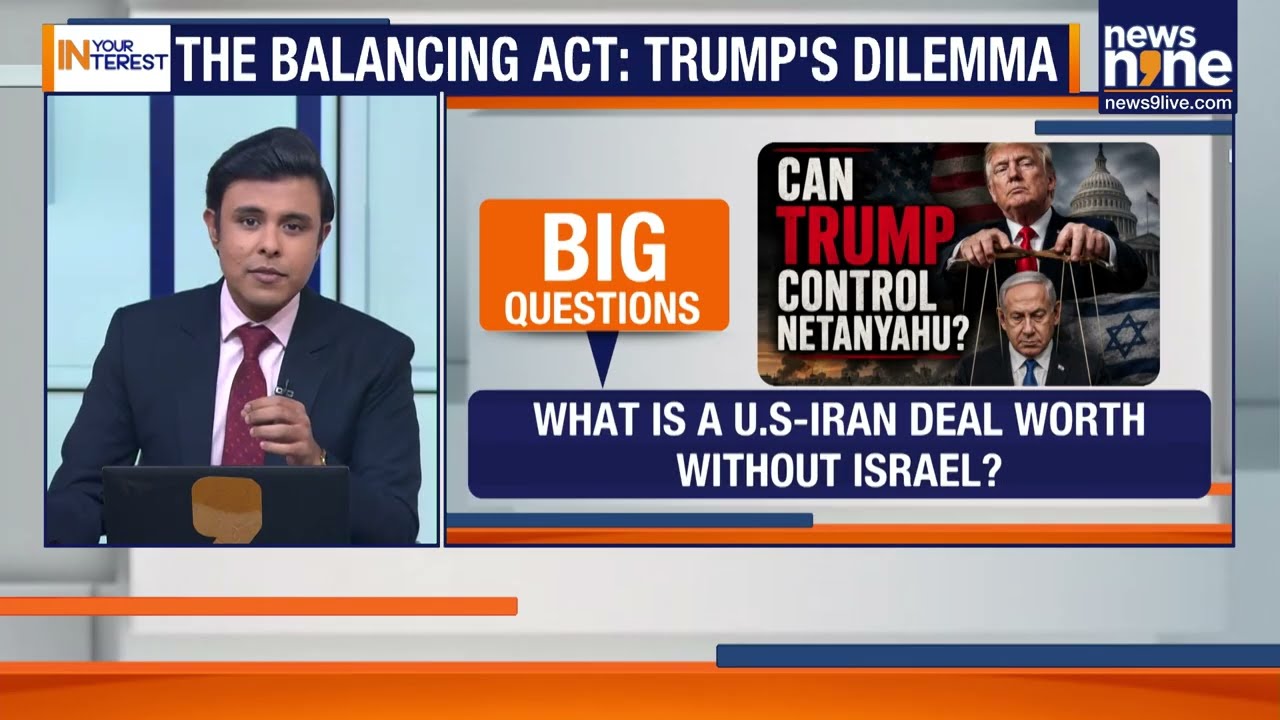
Israel Says 'NO' to Trump's Iran Deal | Peace Deal or Middle East Powder Keg?
NEWS9LIVE
365 views•2026-06-15

Iran emerges stronger, Israel more isolated after war, analysts warn
aljazeeraenglish
65K views•2026-06-14



