International diplomatic agreements often face significant challenges when underlying trust between parties is absent, as demonstrated by the US-Iran deal where Iran's Supreme Leader approved the agreement while publicly expressing skepticism and warning that any violation would trigger a 'crushing response,' highlighting how even signed agreements can remain fragile without genuine mutual trust.
Install our extension to search inside any video instantly.
Iran-US Deal Derailed? Strait of Hormuz Fees | Tehran Warns US
Added:Hello and welcome. I'm Pankaj Mishra.
You're watching World News. The top stories of the day. One India asks if Iran's supreme leader, Mojtaba Khamenei, had doubts over the US-Iran agreement.
Tehran signals it may start charging maritime fees in the strategic Strait of Hormuz. Fresh uncertainty surrounds peace negotiators after key talks are delayed. And Iran's top negotiator issues a sharp warning to Washington saying any violation of the deal will be met with a crushing response. Let's take a closer look at the top stories.
Iran's supreme leader, Mojtaba Khamenei, has given his approval to the new memorandum of understanding signed between Tehran and Washington. But the question is, are there doubts in his mind? He has some reservations that made public. In a statement, Khamenei said the personally he held a different view of the agreement. However, he ultimately allowed the deal to move forward after receiving assurances from President Masoud Pezeshkian and senior security officials that Iran's national interests would be protected. Khamenei also suggested that the United States pushed hard for the agreement because it needed a diplomatic breakthrough after months of conflict. His comments are significant because they show that while Iran's leadership is supporting negotiations, there is still deep skepticism For now, the deal has political backing, but the real test will be whether both sides can turn it into a lasting agreement. And the signs of cracks have started to show.
>> Donald Trump called it a win. Iran's supreme leader called it something [music] else entirely, desperation.
A deal has been signed. A war may be ending, but the man who just agreed to it just got publicly roasted by the very country he was negotiating with. Here's what happened. At a dinner inside the Palace of Versailles, yes, that Versailles, hosted by French President Macron after the G7 summit, the US and Iran signed a memorandum of understanding. The document is called the Islamabad MOU. It calls for immediate end to military operations, the reopening of the Strait of Hormuz, and the US lifting its naval blockade of Iran within 30 days. Sounds like a big American win, right? Well, Iran's new supreme leader, Mojtaba Khamenei, had thoughts. Within hours of the [music] signing, Khamenei posted a message confirming the deal, and immediately reframed the whole thing. Quote, "It was the American president who, out of desperation, used all kinds of leverage to bring this about." Let that sink in.
The supreme leader of Iran just told the world Trump needed this deal [music] more than we did. He also admitted he personally opposed the agreement, but gave his blessing anyway, trusting Iran's president to protect Iranian interests. [music] In other words, I had doubts, but fine, we'll allow it.
The message was clear.
>> [music] >> Iran wasn't begging for peace, America was. So, what exactly did both sides agree to? The US commits to lifting its naval blockade within 30 days, and withdrawing forces from Iran's vicinity within 30 days of a final deal. Iran agrees to ensure safe passage of commercial vessels through the Strait of Hormuz for 60 days. And here's the kicker. Both sides now have 60 days to negotiate a comprehensive final agreement. This MOU is just the beginning.
Khamenei's warning was blunt. If America tries to push for more than what's written, they will not submit to them.
So, where does this leave us? Trump gets to claim he ended a Middle East conflict, Iran gets sanctions relief and an open [music] straight, and Khamenei gets to tell his people, "We didn't blink, they did." If this holds, whether the 60-day final deal actually comes together, and whether either side trusts the other, that's the real story still unfolding. One thing certain, in the battle of optics, Iran just drew first blood. If you found this interesting, hit like, subscribe, and drop your take in the comments. Was this a Trump win, or did Iran play him?
>> The road to a permanent peace agreement is already facing challenges. Plans for a US and Iranian negotiators to meet in Switzerland have been postponed, creating fresh uncertainty over the future of the negotiations. The memorandum signed this week gives both countries 60 days to reach a broader agreement covering sanctions, Iran's nuclear program, missile capabilities, and regional security issues.
Complicating matters further is the growing violence in Lebanon, where clashes involving Israel and Hezbollah have intensified. Rising tensions on another front could easily spill over into the wider regional picture.
Diplomats say the framework agreement was only the first step. The difficult negotiations are still ahead, and success is far from guaranteed.
>> J.D. Vance packed his bags for Geneva, then he didn't go. The US-Iran peace talks set for a mountaintop Swiss resort were canceled. No warning, no explanation, and the world just got a whole lot more nervous. Here's where we are. Just a day ago, the US and Iran signed a 14-point interim deal, a fragile ceasefire meant to pause [music] a war that has already killed at least 7,000 people and sent energy prices spiraling across the globe. The next step, technical talks in Burgenstock, Switzerland. Friday, J.D. Vance leading the American side. Switzerland confirmed the venue. Iran said it was ready, technically. Then Thursday night, the White House released a statement. The logistics of these negotiations have never been simple or predictable. And [music] just like that, Geneva went dark. So, what actually happened? Iran gave the first signal. Before Vance even canceled, Tehran's semi-official Tasnim Agency reported [music] that Iranian negotiators needed to see actual implementation of the interim deal before boarding any plane to Switzerland. [music] In other words, show us you mean it first. Then there was the signing ceremony dispute. U.S. officials wanted a formal ceremony in Geneva. Iran's Foreign Ministry called it unnecessary.
Both presidents had already signed. Why the theater? And underneath all of it, deep structural distrust. Iran's supreme leader called Trump's signature a sign of desperation. Trump had sworn he'd only accept Iran's unconditional surrender. What he got was sanctions relief, unfrozen assets worth tens of billions, and Iran keeping control of the Strait of Hormuz. Some of Trump's own Republican allies in Congress are now asking, who actually won this war?
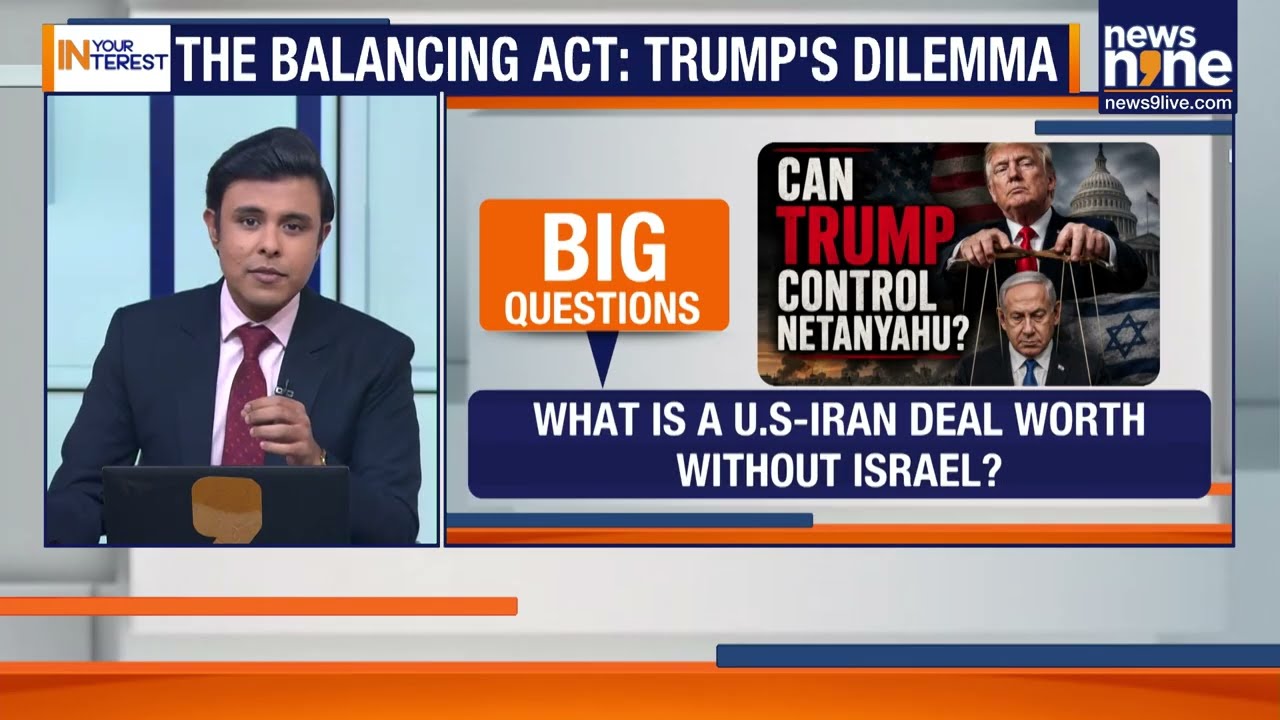
And then there's the wild card nobody can control. Israel was left out of the U.S.-Iran [music] deal entirely, and Israel does not care. On Friday, the same day talks were supposed to begin in Geneva, Israeli strikes in Lebanon [music] killed at least 15 people.
Israel says it's targeting Hezbollah.
The deal calls for [music] permanent termination of the Lebanon war. Israel published a new [music] map showing an expanded occupation zone. Trump is now openly clashing with Netanyahu, one of the biggest rifts between the two countries in decades, but the strikes keep coming. How do you negotiate peace when your closest ally is actively blowing holes in the agreement? Here's the bottom line. The Geneva talks aren't just delayed. They're a mirror reflecting every crack in this so-called deal. [music] Iran won't move until it sees proof. The US can't fully deliver while Israel keeps fighting, and a 60-day clock is already ticking toward a nuclear negotiation that Iran's supreme leader just described as [music] anything but easy. Quote, "If the American side wants to be too demanding, we will not accept it." That's not the language of a country ready to sit down and talk.
[music] The bags are unpacked. The resort is empty. And somewhere between Washington, Tehran, and Tel Aviv, the most important negotiation of the decade is hanging by a thread. Geneva said the talks are off. The question is whether the peace goes with them.
>> Even as negotiations continue, Iran is making it clear that it has red lines.
Parliament speaker and senior negotiator Mohammad Bagher Ghalibaf has warned that Tehran will respond forcefully if United States or its partners violate the agreement or attempt to impose additional demands. In a strongly worded statement, Ghalibaf said Iran would faithfully implement the conditions approved by the supreme leader, but any sign of bad faith would trigger what he called, quote and quote, "crushing response." The warning underlines the fragile nature of the current ceasefire while both sides are talking about diplomacy, mistrust remains deeply rooted after years of confrontation. For investors, policy makers, and allies across the region, the message is clear.
Peace remains possible, but it remains highly fragile, too.
>> "Any violation by the American side, a reciprocal measure will be taken according to the predetermined [music] plan."
That's not a threat from a rogue actor.
That's an official statement from Iran's Supreme National Security Council, and it just dropped in the middle of a fragile, brand new ceasefire deal.
Here's what you need to know.
The US and Iran recently signed an interim [music] agreement, a memorandum of understanding meant to end their direct conflict on all fronts, including Lebanon, including the proxy wars.
Trump even went on social media calling for a complete [music] ceasefire and urging everyone in the Middle East to let negotiations beautifully unfold.
But Tehran Tehran is not in a trusting mood.
In a formal document released by Iran's Supreme [music] National Security Council, the highest security body in the country, the language is [music] ice cold.
They speak of complete distrust of what they call the treacherous and covenant-breaking enemy.
They're not talking about a rival.
They're talking about the United States [music] of America.
And they make it crystal clear, they're watching, monitoring every step of implementation, every deadline, every clause.
Miss one, break one, a pre-planned, predetermined [music] response kicks in automatically. No second warnings.
That's the eye for an eye doctrine stated openly, in writing, to the world.
[music] So, what counts as a violation in Tehran's eyes?
>> [music] >> Sanctions re-imposed before talks conclude? Trigger.
The naval blockade [music] not fully lifted? Trigger.
Frozen Iranian assets still frozen?
Trigger.
Israel, backed by US weapons, hitting Hezbollah in southern Lebanon the very next day after the agreement was signed?
That one's already happening.
In fact, Israeli drone strikes killed at least three people in Lebanon within 24 hours of the agreement.
Hezbollah says it [music] repelled a four-day Israeli offensive, and the world is watching to see if Washington can or will stop it.
Here's the uncomfortable reality.
Iran signed a deal with one hand and issued a war doctrine with the other.
They're telling the world, [music] "We are at the table, but we are not naive."
The Supreme National Security [music] Council pledged to the supreme leader and to the Iranian people that they will show no leniency whatsoever until [music] Iranian rights are secured, and, as they put it, "The pure blood of our martyrs is avenged."
That's not negotiating language. That's a countdown clock.
Will Washington can hold its partners in check before Tehran decides the clock has run out?
>> So, while a new US-Iran agreement has opened the door to diplomacy, major challenges remain ahead. Questions over enforcement, regional security, oil transit route, and future negotiations could determine whether this becomes a historic peace breakthrough or just another temporary pause in a long-running conflict. That's all for now. Thank you for watching World News.
Related Videos
126 .bikey6
mikey.bikey6
572 views•2026-06-16

Tamil Nadu Assembly | "இருமொழி கொள்கை பின்பற்றப்படும்" | Governor Arlekar | 2 Language Policy
News18Tamilnadu
558 views•2026-06-18
Rep
RobSmithOnline
3K views•2026-06-15
Cross-Voting Hits INDIA Bloc As NDA-Backed Nathwani Wins Jharkhand Seat, ZPM Makes Rajya Sabha Debut
cnnnews18
283 views•2026-06-19
WHILE TRUMP BEGGED CHINA FOR HELP — CHINA WAS SECRETLY ARMING IRAN BEHIND HIS BACK
Frumreporttwo
219 views•2026-06-18

The U.S. Iran 14 Point Memo of Agreement... What's REALLY Happening...
J.S.Candid
4K views•2026-06-17
Israel Says 'NO' to Trump's Iran Deal | Peace Deal or Middle East Powder Keg?
NEWS9LIVE
365 views•2026-06-15

Iran emerges stronger, Israel more isolated after war, analysts warn
aljazeeraenglish
65K views•2026-06-14



