In international diplomacy, agreements are often drafted by the more powerful party, requiring the weaker party to sign on the dotted line; effective diplomacy requires calm, objective analysis and willingness to correct mistakes, as demonstrated by the US-Iran peace MOU where Iran drafted the terms and President Trump had to accept them, illustrating that military invincibility depends on external support and that diplomatic success requires strategic flexibility.
Install our extension to search inside any video instantly.
"MoU Was Drafted In Tehran. Trump Signed On The Dotted Line": Ex-Diplomat | Modi-Trump Bilateral
Added:The Iran Iran regime is cruel, but then the Netanyahu regime uh let me call it regime not the Netanyahu government. The Netanyahu regime is 10 times 100 times crueler.
US Navy is killing three Indian sailors for what should I say uh reasons absolutely wrong.
And I had explained it last time, I believe. Uh well, Trump said it's a great loss, we shall work together. But then neither the media nor Prime Minister Modi asked him what does he mean by we shall work together.
This one is very carefully drafted.
>> Mhm.
>> And I went through it.
And it is my view that it was drafted mostly in Tehran.
>> Oh, okay.
>> And basically, President Trump had to sign on the dotted line.
Now, the question is many people say that, you know, the IDF Israeli defense forces, they are invincible.
>> Mhm.
>> Okay, now let us dig deeper.
Why are they invincible?
If President Trump has decided, and if he can stick to his decision, then Netanyahu will have to fall in line.
>> [snorts] >> Hello and welcome to World Report. I'm Yash Irani. Two major geopolitical developments have unfolded in recent days. First, Prime Minister Narendra Modi and US President Donald Trump held a bilateral meeting on the sidelines of the G7 Summit. The two leaders discussed a wide range of critical issues, including peace and stability in the Gulf region, reopening of the Strait of Hormuz, progress on the India-US trade deal, and the deaths of three Indian seafarers during the recent American military strikes in the Gulf of Oman.
The meeting was particularly significant as it marked the first in-person interaction between the two leaders in 16 months following a period of considerable turbulence in India-US relations after President Donald Trump returned to the White House. The second major development was the signing of the 14-point peace memorandum between the US and Iran, bringing an end to the months of escalating tensions and military confrontations that began on Feb. 28.
The conflict had disrupted global trade routes and led both countries to impose naval blockades in the strategically vital the Strait of Hormuz. To help understand the implications of these developments, we are joined by one of India's most distinguished diplomats.
Joining us today is former Indian ambassador to Qatar and Italy, Mr. K.P.
Fabian. Thank you so much, sir. Thank you for joining in for this conversation, sir.
Uh Prime Minister Narendra Modi and US President Donald Trump met on the sidelines of the G7 summit.
Sir, your first thoughts on this meeting, sir.
>> Well, it was good and important that they met.
But, it appears that they had a brief meeting and they uh between the and a longer meeting with the press.
So, we are privy only to what happened with the press, which you also must have seen.
Now, the key questions are what is going to happen to the trade deal?
Well, we shall know only when the USTR trade representative comes. He's expected to come shortly.
Uh there's a lot of praise for Prime Minister Modi.
Well, that was also is welcome, but you know, words should be followed by deeds.
And Trump has a habit of praising uh, even those he wants to what shall I say, uh, deal with in a manner which can be quite stiff. For example, he said, you know, about Netanyahu, he's good, he's great, but then he added, sometimes he gets it wrong.
Yes. So, let us sort of let us be adults >> [snorts] >> and stop taking the praising praise from Donald Trump too seriously.
And uh, >> [clears throat] >> as regards uh, the US Navy's killing three Indian sailors for what shall I say, uh, reasons absolutely wrong.
And I had explained it last time, I believe. Um, well, Trump said it's a great law, we shall work together, but then neither the media nor Prime Minister Modi asked him, what does he mean by we shall work together?
Did he mean that there will be a proper investigation and that will be shared with India? No.
So, [clears throat] that was a Trumpian style and there was not a very alert and intelligent media to sort of, you know, get clear answers from him.
>> Sir, you discussed the praising part, sir. There were some praises that Donald Trump, he put on our Prime Minister Narendra Modi. He said that he's a tough negotiator, he's a killer, beautiful looking man. He said as long as he, that is Prime Minister Modi is the leader, India will play a role in West Asia. He said that if India is attacked and he, that is Prime Minister Modi is the leader, we will help them. If someone else is the leader, then he said I don't know. So, such praises that he such remarks he made at the bilateral meeting. I want to ask a question on that, sir.
He previously said that he can destroy Modi's career and then he made certain remarks which domestically Prime Minister Modi faced a lot of criticisms. So, do you think that he's making up for that and now he's trying to save Narendra Modi's career or is that something happening like that, sir?
>> Yeah, first of all, let us disabuse ourselves of the notion that Trump can make or break Modi's career.
I mean, the fact of the matter is you may not agree with Modi, I may not agree with Modi, but the fact of the matter is he's extremely popular.
And he has given political stability to India for so many years.
Not because of any courtesy or help from President Donald Trump. India is a, you know, self-dependent, self-regulating democracy.
>> Sir, one more thing that Donald Trump said in the meeting that is not much highlighted by anybody, sir. He said that he stopped eight wars. And if you break down these eight wars, he stopped eight wars. He stopped eight wars. He said in front of Prime Minister Modi and in those eight wars there is also the India-Pakistan conflict that we have we had last year, sir.
Do you think that should have been disputed right there at the bilateral summit?
>> No, I don't think we should have disputed that because you know, I don't know whether I have mentioned it to you. We need to spend a little time with what I call Trumpology.
>> Yes, sir. I have seen that episode.
>> Yeah, discipline to understand Trump.
Now, let's go back to Sindhu.
You see, what happened was that India struck so hard that at one point of time Pakistan asked United States, "Uncle, what shall I do now?"
>> Yes.
>> And the uncle said, "You ask for ceasefire."
>> Mhm.
>> And Pakistan asked for ceasefire.
So, the correct thing would have been two things. One, Pakistan asked for ceasefire around 3:30 India afternoon.
The DGMO called his counterpart.
Precisely then, India should have come out with a statement. Pakistan has asked for ceasefire. We are considering it.
>> Yes.
>> After it cannot be accepted immediately.
By the Indian DGMO, it has to go up.
Then it has to come down.
But it would have been most appropriate for the MEA to come out with that statement that Pakistan DGMO has asked for a ceasefire.
Now, [clears throat] MEA was didn't do it.
Well, President and Pakistan was constantly keeping Trump informed. You know what I mean.
And uh later, India informed Indian DGMO informed the Pakistani DGMO that the ceasefire is accepted.
And a little later, if I remember right, the foreign secretary came and told the media.
But by the time Trump had already woken up and he saw his messages from Pakistan saying that Pakistan proposed India has accepted and Trump said that yes, he was supposed to announce. Remember?
He was supposed to announce the to the whole world that there was a ceasefire.
And then he claimed that he had mediated. Now the correct thing for India to have done is one at the level of the official spokesperson of the MEA, we should have said there was no mediation in this case. Don't even refer to Trump.
Mediation happens only when A and B, the two belligerents ask C, mediator, to mediate. Now India did not ask. Simple. Don't even refer to President Trump. Okay.
Second thing is that Prime Minister Modi should have phoned up President Trump.
Thank you for asking Pakistan to ask for a ceasefire. We appreciate that.
That would have been good diplomacy.
You see? Instead of that, what did we do? Our External Affairs Minister went on contradicting Trump umpteen times that America had nothing to do with it.
And he did did that even when he was in Washington.
To expedite our trade deal and other things.
He is what I spoke to the Newsweek guy.
He's an Indian by name and said American initiative nothing to do with it. Is that diplomacy?
You want something from America and then you go on telling the whole world they had nothing to do with it. So Indian diplomacy could have been better.
>> Yes.
Sir, on the killing of three Indian sailors, sir, do you think that it could have been said more emphatically to Trump them we can't tolerate such a behavior from the US and I personally thought that PM should have been more strong in his statements there on those lines.
>> First of all, we do not know what exactly he might have told him when the two of them were together.
But Prime Minister Modi is speaking out on it at the G7 and then later as we all heard at the press along with Trump, I personally consider it was correct and appropriate because let's get it right. We took it up at the embassy level by summoning the CDA. We took it up at the ministerial level by Jayashankar speaking to Marco Rubio.
Then we took it up at the summit level.
Now, whatever Trump says, can we get back those uh three sailors back to life? No.
Yes. Only thing he said we expected and we had every right to expect the Americans to say, "Sorry. Our condolences to the bereaved families. We shall make an investigation and let you know."
Now, they did not have the good manners to do that.
But we have taken it up at the highest level. Now, we should leave it.
And we should move on.
You know what I mean? So, that is what Prime Minister Modi is doing and I think that's the correct thing.
>> Sir, while there were a lot of praises from Donald Trump's side, development came a few days before, sir.
The US which was called the US Indo-Pacific Command, the White House removed the Indo part.
And they named it as the Pacific Command, sir.
Sir, do you think it's a concern and they displayed a wrong map of India also?
So, while there were praises, this is something that the US has done few days back.
>> I have not seen the wrong map of India.
Why do you say it was a wrong map? What what was wrong with it?
>> There was Kashmir was the Pakistan-occupied Kashmir was not the part of India and Aksai Chin was also not shown as the part of India, sir.
>> Well, it could be either a clerical mistake, oversight, or it could be deliberate about the map.
And I take it that our people would have taken it up.
>> Mhm.
>> But as regards the appellation Indo-Pacific and Pacific, let's get it right. It was the Japanese Prime Minister Abe who coined the phrase Indo-Pacific.
You can check it out when. It was sometime in this century.
>> Mhm.
>> Otherwise, there is the Indian Ocean, there is the Pacific Ocean.
>> Mhm.
>> You know what I mean. And naturally, the two oceans are connected. They are linked.
>> Mhm.
>> I don't think we should attach much importance to that appellation.
>> even even previously also the same United States changed it to from Indo-Pacific to Asia-Pacific and they then again switched to Indo-Pacific.
So, is this some kind of posturing or something that the US is trying to showcase, sir?
>> Yeah. My view is that whether it be posturing or not, uh it is better that we just ignore and don't take it up as an issue.
>> Mhm.
>> A rose is a rose is a rose.
Whatever [snorts] name you call it.
>> Who said it?
>> You know that.
Shakespeare.
>> Yes.
>> Yes, sir.
Sir, now a freshly signed MOU, sir, 14-point memorandum of understanding a peace agree peace MOU between US and Iran was signed, sir. Sir, two tweets I want to read in front of you, sir. One was written in 2013. I will tell you who will who has written that tweet, sir.
The first tweet says that what a rotten deal we have made with Iran. We get nothing except laughter at our stupidity. They get everything, including delay and big cash. This was said by Donald Trump himself, sir.
In 2020 also he had wrote a tweet, sir. Iran never won a war, but never lost a negotiation, sir.
Do you think his own words are now describing his own actions uh as far as we see this MOU being signed, sir, between the two nations? Because there are a lot of things that US is giving, but I can't see many things I can't see much that US is getting in return, sir, when I see the 14-point plan.
>> Right.
I have a slightly different point of view, and let me make a few points.
One is that if you read the MOU, you will notice it is not written by the person who writes in uh who puts up those posts on Truth Social.
Whether it is President Trump or someone on his behalf.
Because although you find in those posts, you know, quite often there is uh considerable cruelty to the English language.
>> Mhm.
Yes.
>> But this one is very carefully drafted.
>> Mhm.
>> And I went through it and it is my view that it was drafted mostly in Tehran.
>> Oh, okay.
>> And And uh Basically, President Trump had to sign on the dotted line.
Now, let me draw your attention to paragraph uh 4.7.
Let me just read it out. Let us look at it together.
Seven, the United States of America undertakes to terminate all types of sanctions against Islamic Republic of Iran, including the United Nations Security Council resolutions, >> Yes.
>> IAEA Board of Governors resolutions, and all unilateral US sanctions, primary and secondary, in an agreed-upon schedule as part of the final deal.
The Islamic Republic of Iran and the United States of America acknowledge the critical importance of the sanctions termination issue above mentioned and express their intentions to immediately address these issues in the negotiations in order to achieve mutual agreement on them.
>> Yes.
>> Look at you know, fairly complicated, but grammatically correct and diplomatically superb language.
>> Mhm.
>> I don't think Bitkof >> Or who did that?
>> I don't think Jared Kushner could have written it.
>> Mhm.
>> And I don't think Trump could written it. So, who wrote it? Probably the Iranian Iranian Foreign Minister. I think he has a doctorate uh >> Ambassador >> Yeah.
Okay. So, that is one thing. That is Let me repeat.
>> Mhm.
>> Trump signed on the dotted line. Again, let's understand.
Trump was playing poker.
>> Mhm.
>> Iran was playing chess.
>> Yes.
>> It was an asymmetrical war.
>> Mhm.
>> [clears throat] >> Trump was destined to lose.
Because let us look at his options.
He can resume the war.
bombing >> Yes.
>> As a matter of fact, he did do that.
You know the story about that Apache helicopter. I think we discussed it last time, didn't we?
>> Yes. Yes, sir. They shot down the Apache helicopter.
>> No, they didn't shoot shoot it down.
That's the point.
>> Mhm.
>> They have denied shooting it down.
>> Mhm.
>> It is possible that a drone hit it. But >> Mhm.
>> If IRGC had shot it down, they would have gone to town boasting about it. Did they?
>> Yes.
>> They didn't.
>> No, they didn't.
>> And >> Mhm.
>> if they had shot it down, they would have tried to capture the crew. Did they?
>> Yes.
>> No.
>> No.
>> Trump was able to I mean, the Pentagon was able to send a drone boat.
>> Mhm.
>> And 2 hours later, or >> Yes.
>> you know, they were rescued.
>> Yes.
>> In other words, from what we know in the public domain, and Iran has denied that it had done anything to about it targeted it.
>> Mhm.
>> So, Trump knew all this. But despite that, he wanted to make use of it as an excuse to hit hit hit uh Iran for 2 days.
Now, why did he do that? He escalated in order to de-escalate.
>> To de-escalate. Yes.
>> You know?
>> Mhm.
>> And then, you know, he sort of said, you know, uh we are negotiating. We Our negotiations are continuing.
>> Parallel negotiations.
>> said that, you know, this uh the third day's attack was stopped 1 hour before.
>> Aha. Because Pakistan said so. That's why we are stopping, he said.
>> Yeah, things like that.
>> Aha.
>> Things like Okay.
So, what we have to understand is that Trump came to the conclusion that he had no options but to settle it diplomatically, because he couldn't have started a war and then on the 4th of July, while he's showing everyone the $250 bill with his face on it, where the body bags come.
>> Yes.
>> Or an Apache helicopter gets shot down.
>> Mhm.
>> Okay. Then, now again, look at it.
Uh suppose he resumes the war after the 4th of July, then Iran has the ability, the wherewithal, to withstand it till the midterms in November.
>> Yes, November. Yes.
>> He will meet his Waterloo.
>> War of attrition, sir.
>> Yeah. And now, I compliment President Trump for correcting his error.
You see, it is to err is human.
>> Mhm.
>> But not every human being is willing or able to >> Correct that.
>> himself or herself. And Trump did it.
I salute him.
>> Mhm.
>> You see? And another thing is that, you know, you should see the uh contradictions between public statements made by United States and the content of the uh 14 point.
Marco Rubio said how many times that the enriched uranium will be brought to the United States.
>> Yes.
>> And what does the MOU say? It says it will be down blended in Iran in the presence of the [clears throat] IAEA.
>> Yes.
>> It doesn't even say that America will be present.
>> Yes.
>> IAEA inspectors may include an American, but may not.
That's not the point.
>> America as an entity will not be present there.
>> Yeah, okay.
Second, Marco Rubio was saying that there is no question of giving them any money and this even Trump said, you know, this story of 300 billion is, you know, false fake news.
>> Fake news, yes.
>> What is there in the MOU? You've seen it.
>> Yes, yes, sir.
It's there, sir.
>> So, what I'm trying to say that whatever President of the United States or his Secretary of State or his Secretary for war tells tells us, we have to take it with pinch of salt.
>> Pinch of salt.
>> We cannot trust them. We have to apply our mind.
>> Yes.
>> So, basically, now the question is whether Netanyahu will be the fly in the ointment.
>> Mhm.
>> Well, many people say that, you know, he has also said Netanyahu said that uh, Iran sorry, Israel has the right to defend itself.
>> Mhm.
>> What does it mean?
It means, uh, you know, uh, it can bomb any building in Lebanon.
>> Yes.
>> Just because it suspects that a Hezbollah guy was already in it or was about to be in it or was planning to come there.
>> Aha.
>> You know what it The ridiculous extent to which Netanyahu goes in conducting his cruel operations. Because he's killing only civilians.
He's killing only women and children.
And also in Lebanon and they did in Gaza, too. They carry out a bombing and then other people come, the first respondents come to help those who have been injured. They come to do another bombing.
>> Yes.
>> You know what I mean?
>> Yes.
>> You see that Israeli style.
Now, thank God Netanyahu has has been shown his place.
>> Mhm.
>> And you know the word Netanyahu means the gift of God.
>> Oh.
>> [laughter] >> Polish Here a Polish His origins are Polish, but that name was difficult uh for English-speaking people, then it was changed deliberately to Netanyahu, which means the gift of God. Well, I don't know whether it's a gift. In any case, I won't say it's a curse of God because God >> [laughter] >> never cursed people.
>> Uh God never cursed people.
>> I don't know. I don't want to carry this logic further.
>> Uh-huh.
>> Now, the question is many people say that, you know, the idea of Israeli defense forces they are invincible.
>> Mhm.
>> Okay. Now, let us dig deeper.
Why are they invincible?
They are invincible because the American military gives them arms, gives them the technology, and America gives Israel them diplomatic protection.
Now, remove that.
Does the IDF remain still invincible?
No.
Okay. In other words, if President Trump has decided and if he can stick to his decision, then Netanyahu will have to fall in line.
Now, I agree it is not in the interest of Netanyahu because the corruption proceedings against him will resume and he might have to go to jail.
But >> [clears throat] >> it is my view that it is better to have one person in jail rather than another you know, 2,000 human beings killed.
>> Killed. Yes.
>> Don't forget you know, people say that the Iranian regime has killed uh 6,000, 7,000 Iranians in December, January. Now, I don't approve of it.
It's wrong to kill human beings.
>> Yes.
>> But let me compare how many has Netanyahu killed in Gaza?
More than 70,000.
>> More than 70,000.
>> More than two-thirds women and children.
>> Yes.
>> Are they uh Hamas soldiers I mean militants?
Okay.
This war in Iran well, about 3,600.
And in Lebanon, a similar figure. You just total it up.
>> Yes.
>> So, I agree that the Iran Iran regime is cruel. But then, Netanyahu regime uh let me call it regime.
Not Netanyahu government.
Netanyahu regime is 10 times, 100 times crueler.
>> Than the Iranian >> or either.
Okay? So, it's a very good thing. And then, let's look at what is good for India.
For a change, let's be a little selfish.
Let's look for you'll get it from the Indian point of view. A we go back we we go back to Chabahar.
>> Yes.
>> We have spent more than 610 million dollars. For how many years you can calculate.
>> Yes.
>> Okay?
>> Aha.
>> Also, we go back to the International North-South Corridor.
>> Yes, sir. INSTC. Aha.
>> And >> [clears throat] >> we can buy oil from Iran.
>> Yes.
>> The oil prices will come down.
>> Yes. Mhm.
>> Yeah, oil burden, as the bureaucracy say. I I think we talked last time. Why do they call it burden?
It's not a burden at anyway. Uh sorry, fertilizer burden. Fertilizer burden.
>> Mhm.
>> They say now it is going to double.
>> Mhm.
>> You know, when [clears throat] we give fertilizer at a lower price to the farmers, >> Mhm.
>> you know, we are not giving them any charity because they make food for all of us.
>> Aha. Mhm. [laughter] >> Anyway.
>> Yes.
>> So, for India, it's a big thing. And let me also tell you, once Iran sanctions are removed and Iranian oil and and energy are exported, >> Mhm.
>> Iran's economy will flourish.
>> Mhm.
>> And that 300 billion which Trump talked about, he had clarified it is not money from the American taxpayer.
It is the money which companies will invest. And why will they invest? They will invest because if Iran's economy is growing, then it is a most attractive place to invest.
>> Mhm.
>> And there's a lot of work. The bridges destroyed, the roads destroyed, >> Reconstruction of >> the hospitals destroyed.
>> Mhm.
>> You know what I mean.
>> Yes.
>> So, 300 billion, that's a good amount.
>> Yes.
>> You know, and now one more point. Trump has been saying that you know Obama sent plane loads of currency notes.
>> Aha.
>> Remember?
>> Aha.
>> Yeah.
>> While signing the JCPOA.
>> Yeah. Yeah. Now he's completely wrong historically.
He's completely wrong.
>> Aha.
>> Because some currency notes were sent.
>> Mhm.
>> About 400 million. Let me give you the background.
>> [clears throat] >> Way back when Shahanshah was in power.
>> Mhm.
>> Iran had Iran had paid to America 400 million dollars for buying weapons.
>> Mhm.
>> In the '60s and the '70s, Iran was a top one of the top, if not the top, buyer of weapons.
>> Mhm.
>> Then in 1979 >> Mhm.
>> after the revolution when the Iranian Prime Minister >> [clears throat] >> went to Algeria.
>> Mhm.
>> Algeria the capital is Algiers.
Algeria was celebrating 25th anniversary of its liberation.
>> Mhm.
>> You see?
And Brzezinski the National Security Advisor to President Carter, he also went there.
He didn't go there because he wanted to celebrate Algeria's >> Mhm.
>> [clears throat] >> liberation. He went there to meet the Iranian Prime Minister.
>> Yes.
>> And he called on And Brzezinski said, "Look, the money paid by the Shah we can send you the weapons. No problem."
Then he said, very important, he said, well, Iran and the United States should work together to counter Soviet expansionism.
>> Mhm.
>> Remember during the Second World War, Stalin had captured some uh Persian territory.
>> Mhm.
>> Then the Iranians very smartly again played chess and they got it back.
They came they wrote an agreement uh agreed to an agreement with the Stalin, but there was a clause that this agreement had to be ratified by the Iranian parliament.
>> Mhm.
>> Well, after that agreement was signed, there was a new election and the new Iranian parliament refused to ratify it.
>> Mhm.
>> Well, by the time, you know, Truman and others were there and they were there to support Iran.
>> Mhm.
>> So, Iran outwitted Stalin.
>> Yes.
>> Okay.
>> Haha. [laughter] >> Yeah.
To go back, when uh Brzezinski and the Iranian Prime Minister agreed on all that, the Iranian Prime Minister heard over the radio that Carter had decided to give political asylum to the Shah and Shah.
>> Mhm.
>> But that was against the advice of his Secretary of State.
>> Mhm.
>> That was against the advice of his ambassador or at embassy in Tehran.
>> Mhm.
>> But Henry Kissinger and Nelson Rockefeller >> [clears throat] >> they pushed Carter and she did that.
And then, when they heard it over the radio, the Iranian Prime Minister said, "Give us the Shah back. Give us the Shah back."
And Brzezinski said, "No, with my president just taken a a decision and it cannot be reworked. He is our honorable friend, the Shahanshah."
So, the conversation collapsed. I tell you, within 48 hours, >> Mhm.
>> militants, mainly students, took over the American Embassy.
>> Mhm.
>> Not because the government of Iran asked them.
Not because Ayatollah Khomeini asked asked them.
>> Yeah.
>> The government of the day was unable, not unwilling, but unable to send their police force and disarm >> Mhm.
>> the militants. And you know what they did? They made a special arrangement for the US CDA to come to the foreign office, accommodated him nicely so that he could speak to Washington.
>> Wonderful.
>> Remember, there was no cell phone at that time.
>> Yes. Mhm.
>> Anyway, then the sanctions followed. Then Carter tried to send an expedition, which was a disaster.
Then Iranians were approached by Reagan's the candidate Reagan's team.
And minutes after Reagan was installed, the hostages were released.
And Algeria negotiated it.
>> Mhm.
>> As part of that negotiation, >> Mhm.
>> America was supposed to pay back that 400 million plus interest and all that.
>> Mhm.
>> to Iran.
>> To Iran.
>> They didn't do that because in the American system, the left hand doesn't know what the right hand does.
>> Mhm.
>> a payment in dollars, you need so many approvals.
>> Mhm.
>> And then Iran had to take it to court.
And there was a tribunal in at The Hague.
Iran-US tribunal. And the tribunal decreed that the payment should be made, and it was 400 million plus the interest charges 1.3 billion.
Now, why did Obama pay that? Not in connection with the JCPOA. At that time, Iran was holding some Americans in detention.
And when Obama wanted them to be released, Iran said, "Yeah, we can look at that, but you better pay this first."
And that is when And why did he have to send currency notes? Because the existing regulations did not permit sending dollars to Iran.
So, he had to send the I think French francs or something like that. But it had nothing to do with the 2015.
Now, Trump simplifies historical events, and he invents a story which has no factual basis, but then his people believe it.
Who has the time and patience to dig into history? History is mostly invented.
It's boring, isn't it?
>> For Trump, obviously, sir.
>> [laughter] >> Sir, [clears throat] you mentioned an episode when the students in Tehran marched to the American Embassy, and they get out the embassy. There's a movie on that, sir. It's called the It's called Argo. You should watch the film, sir.
It's a beautiful film. Then the Americans had sent a delegation in the form of a film crew, sir. And then they evacuated all those diplomats from Tehran, and then they left from the country.
So, That's a Sir, uh my next question sir, who do you think has conceded more sir?
Obama in the JCPOA or Trump in the uh shall I call Treaty of Versailles?
>> [laughter] >> Now, let's get it right. Trump wanted the treaty the MOU to be signed >> Mhm.
>> on [clears throat] his birthday that was Sunday.
>> Mhm.
>> Iran refused. Then Pakistan pleaded and Iran agreed to sign it the same digitally.
>> Mhm.
>> And [clears throat] who signed on behalf of America?
I think Trump and Vance.
>> Yes.
>> And who signed on behalf of Iran? The parliament speaker.
>> Masoud Pezeshkian, sir.
>> Hey?
>> Or Ghalibaf. Was it Pezeshkian or Ghalibaf, sir? I think it was Ghalibaf, sir.
>> Uh okay. Anyway >> Sorry, I think it was Masoud Pezeshkian, sir.
>> Pezeshkian >> Because his photos were getting viral on Twitter. Okay, sir, continue.
>> That's That's a good.
But then Trump wanted the physical ceremony very early, but finally he concluded with a Versailles Palace where he signs it and as you saw the television uh Marco Rubio was acting like a office assistant bringing the document, taking the signa- signing one document and getting the other.
Now, it's like this.
It was signed in English and in Persian.
>> Mhm.
>> Okay.
>> [laughter] >> And the final paragraph >> were people people were zooming onto the document that Trump was signing and they were saying it's in Farsi, that's Persian.
Yes.
>> Uh Persian Farsi and Persian are the same.
>> Now, what is beautiful is that the last paragraph says that the final agreement should be endorsed by the United Nations Security Council.
>> Yes, sir.
Last point, 40 >> That is why I said it was drafted in Tehran.
That is why I said Trump was made to sign on the dotted line. But, once again, I admire I congratulate Trump for his ability and willingness to correct a mistake made, which I am sorry to say is not a very common trait among Homo sapiens sapiens.
>> Yes, sir.
Sir, my last question, sir, and it's a little off the topic, sir.
Pakistan is deploying submarines in the Bay of Bengal, sir. He's Pakistan is planning to deploy submarines in the Bay of Bengal. So, on the west of Bay of Bengal, we are planning a Great Nicobar project also, sir.
citing security concerns and uh those reasons. So, how do you how do we see this, sir? Isn't it concerning for us in the Bay of Bengal after 1971 Pakistani submarine planning to come?
>> Okay. Now, let's look at the big picture. Let me ask you.
>> Mhm.
>> Has India done anything to develop and promote a constituency in Pakistan which wants better relations with India?
Tell me yes or no.
>> No, no.
>> Okay. We have said that blood and water cannot flow together.
>> Yes.
>> Therefore, the Indus Water Treaty is kept in abeyance.
>> Mhm.
>> Now, does it uh promote a constituency in Pakistan that wants better relations with India?
>> Who will suffer?
>> Who suffers?
If water doesn't reach them, the farmers, >> Mhm.
>> the ordinary people, not uh the field marshal, >> Mhm.
>> not [clears throat] the prime minister.
>> Yeah.
>> Correct?
>> Mhm. Correct.
>> It is the >> Mhm.
>> So, do you think we are not? And secondly, we don't give visa to Pakistanis.
>> Mhm.
>> Is it not better to give them visa so that let thousands of them come and see the great progress which India has made >> Yes.
>> as compared to Pakistan?
>> Mhm.
>> They then go back and tell You want a person comes here, he or she will speak to 25 others.
>> Mhm.
>> Correct?
>> Yes, word of mouth.
>> That again, a constituency which wants better relations India. Then you take business.
Isn't it cheaper to get things through the border rather than through Dubai?
>> Yes, sir.
Wagah border is better.
>> Okay. So, what happened? We are in both.
And then, as you know, decisions on relations with India in Pakistan are made primarily by the military.
>> Mhm.
>> Has India any communication with the military?
>> No, sir.
>> And we get so worked up when Trump invites the field marshal for a White House lunch.
>> Mhm.
>> But the point is Trump knows that this is a guy who holds power in Pakistan.
So, he's talking to that guy.
>> Mhm.
>> He's not He's speaking to those who are in office, >> Yes.
>> who can take decisions. Not saying, "Oh, I don't like his face. I won't talk to him."
Or saying that, you know, he had said something 5 years ago which was nasty.
So, I won't talk to You know, did we discuss this this uh >> Yes, yes, sir. In our last conversation we had discussed it.
>> I advised it to the Bangladesh Prime Minister.
>> You discussed it on your yesterday's show, sir.
>> I I saw it.
>> Uh you saw it. So, look at that. Uh don't do that, you know.
This is not the way how things should be handled, you know. We have to do it with a certain maturity.
With a certain calmness. What does the Bhagavad Gita say?
If you are angry, then your memory gets disturbed. Correct?
Next stage is if your memory gets disturbed, your judgment gets disturbed.
The last is ruin.
So, let us remain calm.
>> Yes.
>> After all, you know, that is the Indian tradition. Calm consideration.
>> Yes.
>> Looking at all the options objectively and with goodwill for all.
Not focusing, you know, I'll finish off this guy. I'll finish off that guy. No.
I mean, if anyone exports terrorism to India, that of course has to be handled.
As the government has done.
There's no question of you know, taking it easy.
>> Uh >> But that doesn't mean you shouldn't talk to them.
And when you talk when I say you should talk, I mean talk firmly.
>> Hm.
>> [clears throat] >> Yes.
>> I will. Next interview I'll give you an example when I had spoken firmly and to solve certain things. Okay?
>> Yes. Sir, I had read this analysis such analysis in a book called the spy chronicle that sent you an excerpt also said on that called the spy chronicles. So it's it's discussed in a way that uh a little confrontational mode in with Pakistan is the dual doctrine and little talks diplomacy is kind of a doula doctrine sir. So I think we are currently pursuing the dual doctrine.
I think so.
>> Well, I don't want to give any names.
All that I would say is a good diplomacy is taking care of your interest in a manner which delivers.
>> Mhm.
>> Not in a manner which gets which causes more terrorist attacks.
>> Mhm.
>> Balakot did not put an end to terrorism.
>> Yes. Pulwama also.
>> Obviously, you have to I said that you may have to respond militarily, but that should not be the only response.
>> Mhm.
Yes.
Talks talks should be there with Pakistan is what you're saying sir.
Thank you so much sir for joining in for this conversation sir. It was a pleasure talking to you and do watch K.P. Fabian sir's show the diplomat and he puts his years of experience into that show and gives amazing insights on the events that happens across the world. Thank you so much sir. Thank you.
>> Yes, and also ask your listeners if they have any questions they can email them to you and you will let them >> put your email on the video sir and in the description also.
Thank you sir. Thank you.
>> Bye-bye. Thank you.
>> Hey.
Related Videos
126 .bikey6
mikey.bikey6
572 views•2026-06-16

Tamil Nadu Assembly | "இருமொழி கொள்கை பின்பற்றப்படும்" | Governor Arlekar | 2 Language Policy
News18Tamilnadu
558 views•2026-06-18
Rep
RobSmithOnline
3K views•2026-06-15
Cross-Voting Hits INDIA Bloc As NDA-Backed Nathwani Wins Jharkhand Seat, ZPM Makes Rajya Sabha Debut
cnnnews18
283 views•2026-06-19
WHILE TRUMP BEGGED CHINA FOR HELP — CHINA WAS SECRETLY ARMING IRAN BEHIND HIS BACK
Frumreporttwo
219 views•2026-06-18

The U.S. Iran 14 Point Memo of Agreement... What's REALLY Happening...
J.S.Candid
4K views•2026-06-17
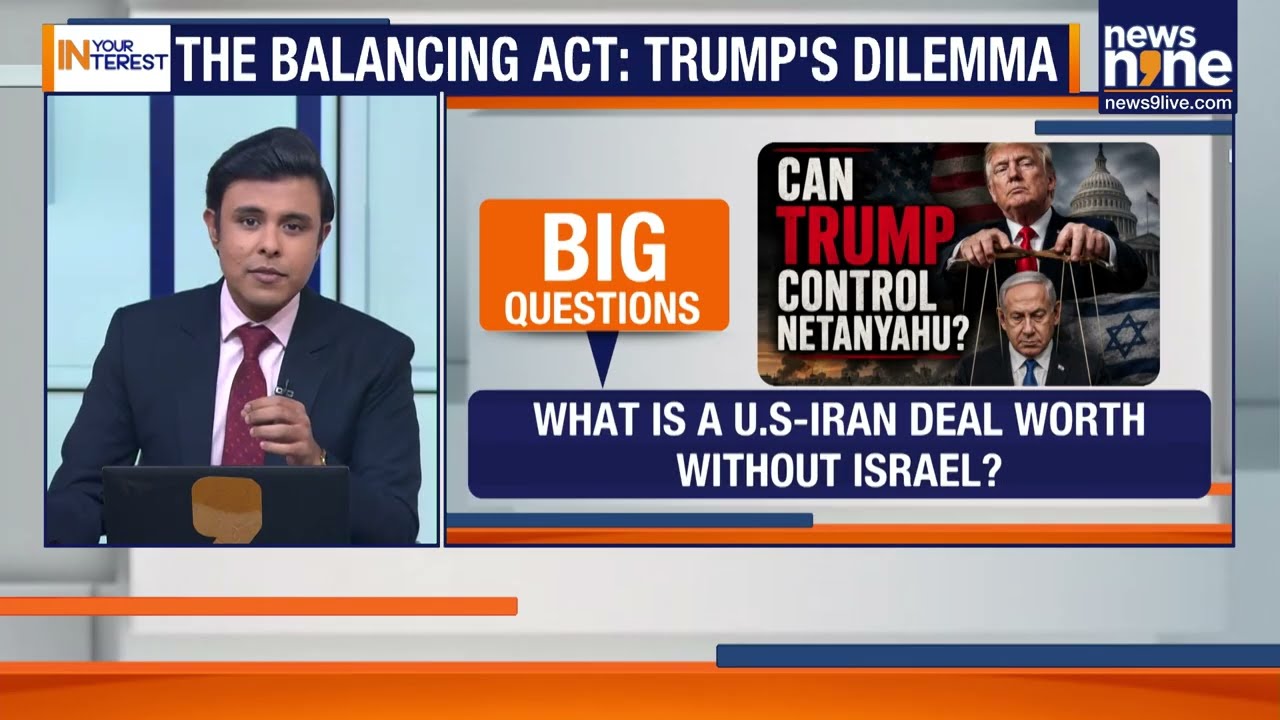
Israel Says 'NO' to Trump's Iran Deal | Peace Deal or Middle East Powder Keg?
NEWS9LIVE
365 views•2026-06-15

Iran emerges stronger, Israel more isolated after war, analysts warn
aljazeeraenglish
65K views•2026-06-14



