The US-Iran Memorandum of Understanding (MOU) signed in Switzerland remains tenuous because Israel's continued attacks on Hezbollah violate the agreement's ceasefire clause, potentially nullifying the deal; the US has made significant concessions including sanctions relief and $12-24 billion in frozen funds, while Iran retains 70% of its ballistic missile capability and 90% of launchers around the Strait of Hormuz, leaving the US with limited leverage and facing domestic criticism from Republicans who view the agreement as surrendering to Iran.
Install our extension to search inside any video instantly.
Iran-US Peace Talks Paused: Is Israel The Spoiler?
Added:[music] >> Hello and welcome to India Matters. I'm Vishnu Shobhana and I'm on the banks of Lake Geneva. I was meant to be in Lucerne, in Switzerland today. That's where Iran and America were meant to have their talks. The Iranian parliamentary speaker was supposed to meet the US Vice President JD Vance, but both sides chose not to attend. Why?
Because fighting resumed between Israel and [music] Lebanon and Hezbollah.
In just the last couple of hours, there is news of another temporary ceasefire or perhaps some sort of a ceasefire between Israel and the Hezbollah. But for the moment, that first round of talks, which was supposed to take place in Lucerne after the memorandum of understanding was started, however, it's just an MOU, which has been agreed upon.
That hasn't taken place at all for the moment. So, the question is this, this appears to be an incredibly tenuous peace. And I'm not even sure you can call it the start of [music] a peace process, which is lasting, because we aren't quite there yet. Joining me now, a very special guest, one of the the finest thinkers on international affairs, Ravi Agarwal. Ravi, good to have you with me.
It's been so difficult to get to this stage, but if Israel continues fighting with Hezbollah off and on, then where does that leave Iran?
>> Well, the very first clause of the memorandum of understanding says that this is a ceasefire and a peace deal that includes Lebanon and includes Hezbollah. And so, were Israel to continue to attack Hezbollah and this is very iffy in the here and now, then I think Iran would be left with no option at some point to say, well, this agreement, this memorandum of understanding is null and void because they must be seen regionally within Lebanon and for Hezbollah especially to remain loyal to them, Iran must be seen as backing them.
So, at the very start of this MOU, we have a very tenuous agreement and this is tenuous for many reasons as you were pointing out, but this certainly is one of it. Israel is not a party to the agreement, nor is Lebanon, nor is Hezbollah. Two parties are are part of this agreement, that's the United States and Israel and for many reasons it is tenuous.
>> Bobby, where you are in the United States is the extent of what is taking place with America deciding to one way or the other get out of this war. Is that being reflected in public? Do people understand the significance of the Americans pulling out of a war where they haven't ultimately made all the objectives which they themselves had stated when this all began?
>> The war is quite unpopular in the United States. I think most Americans, like much of the world frankly, is just relieved that President Trump intends to pull out. He's made very clear no matter what the terms are, that he feels tired of the war, that he wants to get out and get out he will.
I think he's made that clear to Israel as well, which is perhaps most of all the unhappiest party in this entire agreement and setup. The American people, as I was saying, will be relieved that gradually gas prices will begin to come down from here on. I think they will also be relieved that the United States will be spending less money abroad, might be able to focus on more problems at home. So, I think for all of those reasons, the American people won't be focused too much on how they're exiting, but they may ask tough questions about why they went into the war in the first place. And I I for President Trump, that is the biggest thing. For him to be able to explain why did you go in? Because none of the objectives that he had set out um to go into this war have been met. Um the Iran is the regime is still in place. The nuclear file has not been touched at all. So, Iran could just as easily tear up this agreement in the future um and and try to get a nuclear bomb.
Uh the fact that Iran uh has, you know, in the past had de facto control of the Strait of Hormuz and could re-exert that control 60 days from now, maybe future down the line. Uh all of this means that Iran has in place several things that beg the question, why start this war?
Iran still has a huge battery of uh ballistic missiles, for example. It has not promised to stop supporting the likes of Hezbollah, one of its proxy groups. So, again, the question that every opposition member in the United States and members of the public will ask is, what did you get out of this war? Why do it at all?
>> What about the other GCC nations? Is there a sense that given the fact that Iran is willing to uh attack all of their bases, they've done that in fact quite successfully, that this has been a liability which these nations didn't expect. It's been economically disastrous for countries like Qatar with billions in damage to oil facilities and gas facilities. This being the case, is there a sense that America is no longer as popular uh in that region as they once were or or as welcome, I should say, as they once were?
>> At some level, yes, but I think different countries will respond differently. I think we often treat the Gulf or the Middle East as a monolith.
It is not, of course. Um but let me just say this. Uh for all the countries that invited the United States to build military bases on their soil, those countries now realize they essentially put a target on their backs. Um Iran knew fully well what it was was by attacking those countries, attacking those military bases. It was essentially getting those countries to realize that aligning with the United States does not make you safer. In fact, it gets you into trouble. Um those countries now will be weighing very carefully what it means to align with the United States.
Some, like the United Arab Emirates, will double down on that partnership because they've gotten closer and closer to Israel.
>> [clears throat] >> Some, like Saudi Arabia, may make the opposite decision and decide that they want to hedge in the Middle East. They want to hedge between the United States and China, but they also want to look and see, you know, what kind of Iran emerges. Look, Iran is not a tiny country. This is a country of uh many tens of millions of people. It has shown through this war that uh it is no pushover. Um by the way, its ground military force wasn't even tested in this war. Um and so, I think for countries in the region, they're realizing we have to live with Iran. We have to imagine a future in which Iran could do any of the things it was doing before, but even more. It could attack our energy infrastructure, our civilian infrastructure. It could re-disrupt the Strait of Hormuz. We have to get along with Iran. And so, for countries in the region, they will make a complicated set of decisions. And I think this also means they will hedge against the United States in a way that they didn't before.
>> How does the nuclear issue get resolved in Iran? Um through IAEA inspectors?
Because even if that is to happen and IAEA IAEA International Atomic Energy Agency inspectors come in, somehow they have managed to retrieve that uranium, diluted, right? And therefore, uh make it uh make the Iranians unable to convert that into weapons-grade uh uranium. That too is something which America didn't want. They wanted to take the uranium away. In fact, they militarily planned to do that. All of that has disappeared by way of plans.
>> It has, for now. I mean, the Trump administration will say that what they've done with this MOU is they've won some time. They've won 60 days in which to maybe reopen some of the nuclear talks, but I will remind your viewers uh that Iran has things in place today that it did not have in 2015 uh when the Obama nuclear deal was being negotiated. Uh for example, it can reclose the Strait of Hormuz, and that is something that would be immensely damaging uh to Trump and to the global economy. I will also remind you and your viewers that the Obama nuclear deal took the better part of 2 years to negotiate.
To expect to negotiate in 2 years an agreement in 60 days, knowing fully well that Iran will try to exploit that deadline, will try to hurt America, will try to hurt the global economy once again, it means that the United States would approach any potential nuclear negotiations with its hands tied behind its back. Uh and that means I think at this point it is extremely unlikely that we will emerge in the next 60 days with anything that looks like uh the Obama nuclear deal. If we get anything at all, it will be weaker uh and more easily broken.
Uh and that's not a good thing for any of the people who have worried about Iran getting a nuclear bomb.
>> You know, I I had my notes with me on the Obama JCPOA of 2015 and the Trump agreement that they're trying to get into now. In 2015, there was a 98% reduction in Iran's uranium stockpile.
Uh under Trump, there has been no agreement. Uh Iran's enrichment program was kept at 3.7%. There is no agreement with Trump. Uh there were sanctions in place under Obama. Sanctions have now been lifted. Um again, it it just seems to me that Iran has been completely on the ascendancy in this entire negotiating process.
>> Yeah, that's absolutely right. We haven't talked about the sanctions so far, but the financial payout to Iran on this is immense. So, first of all, there is somewhere between 12 and 24 billion dollars in frozen Iranian funds that will be released to them. This will directly enrich some of the most powerful people in Iran, uh and this, of course, is the regime.
So, again, if the United States had set out for regime change, this is the very opposite of that. This will entrench them much further than before. But, the second thing that is very interesting is a 300 billion-dollar fund, uh an economic reconstruction fund. It is unclear where the money comes from, who is going to put money into that fund, but were that fund to take place, that would mean Iran gets to rebuild its economy. It could potentially divert some of those funds to rebuild other things that are involved with the military. And then, most of all, I think, is the potential of the removal of sanctions, because if the United States steps away from its so-called maximum pressure campaign, moves moves away from its strategy of sanctions, in one way, this is a good thing in that it opens up Iran's economy to the region, to the world, and one could argue that that is ultimately the thing that could lead to some form of regime change in the future, because that is how democracy works. But, I don't think that's the strategy of the Trump administration.
Let's be clear. The Trump administration here was so desperate and so frustrated uh by this war and the damage that it was causing to the American economy and to the global economy, that they were just willing to get out come what may. That is what we're looking at now.
>> To understand the removal of the sanctions for Iran, is that immediate or is that going to be graded? Because there's nothing more that the Iranians want than the you know, than to have the right to export as much oil and gas as they want. You know, there've been restrictions on that in the past.
Uh >> Are those sanctions gone now or is there also supposed to happen eventually?
>> My understanding is that they will happen in time. It is unclear to me when exactly they go into effect. You know, one of the things we haven't mentioned so far, Vishnu, is that, you know, we do have a memorandum of understanding, but repeatedly in the background, we have President Trump who has said, you know, first of all, the agreement will be signed in Lucerne, where you were going to be, but then maybe it won't get signed, maybe it'll get signed in a day or two days or 48 hours or in a week.
There is so much wishy-washiness and vagueness in the background of all of this.
Uh and Trump has made clear throughout that he could easily renege on any of the things he said. He's also said that, you know, were Iran to be seen to be breaking any of the clauses of the MOU, uh we'll just go back to bombing Iran.
Those are That's exactly what Trump has said. So, it's very hard for us to parse individual details and see if they stand up to scrutiny, but the bigger picture, of course, um is that the United States has made very clear it wants out. It It has lost a lot of its leverage uh to impose other kinds of restrictions on Iran in the future. And by the way, just to connect uh some of the the dots here in our geopolitical Sudoku, um the United States has also been talking about loosening uh reimposing, sorry, sanctions on Russia. Um and part of that deal is connected to Iran because the United States was hoping that European countries uh would help the United States de-mine the Strait of Hormuz. These are mines that Iran had put in place there. And also, that these European countries will back uh this MOU. So, Trump has been willing to give up a lot of things, a lot of leverage, just to make this happen. And when you do that in any negotiation, the other side understands that you're desperate and they're able to push through what they want.
>> The big concern, of course, ballistic missiles.
Um America said that they've destroyed a lot of Iran's ability to manufacture ballistic missiles.
But they still have the ability of doing this, right?
Uh you know, mass manufacturing ballistic missiles. So, the military threat is huge.
>> Oh, yes. Not only does Iran retain the ability to manufacture ballistic missiles, US intelligence itself has shown that Iran retains about 70% of its ballistic missile capability, 70% of its mobile launchers, 90% of its launchers that are dotted around the Strait of Hormuz.
In effect, this means that Iran, at the drop of a hat, could find it very easy to attack Israel, to attack other countries in the region, to hurt countries energy infrastructure. They could easily shut down the Strait of Hormuz. And these are just ballistic missiles.
Remember, Iran also is a mass producer of very cheap Shahed drones. These cost about $20,000 a pop.
Those can be immensely disruptive to ships in the region, to infrastructure in the region. So, Iran will remain It will emerge out of this conflict with an immense ability to disrupt, to deter, to force other countries to remain extremely wary of it.
I'll also remind you one more thing on the defense angle, Vishnu.
Um countries in the region have been using a lot of their missile defense systems against these ballistic missiles. And I'll just give you the example of the United States, the data we do have. The United States has used up 1/3 of its Patriot defense missiles.
It has used up 1/3 of its THAAD missiles. It has used up about a quarter of its Tomahawk missiles. Each of these missiles uh our defense interceptors, take up to 4 years to manufacture and each of them costs many tens of millions of dollars.
So, uh you can imagine that countries in the Gulf have expended similar amounts of munitions, of defensive capabilities.
They are currently just, you know, tending to their wounds, as it were, and would very much be hoping we don't have a resumption of war because Iran has showed it has the capability to really hurt its adversaries.
>> And, you know, I mean, the loss of more than 40 American aircraft, some of it friendly fire incidents, some of it shoot-downs, attacks on American bases, the destruction of THAAD radars, as well. Uh the military costs of this for America have been immense. Fortunately, the loss of life has been low.
>> That's right. Uh and in some senses, this is the story of modern warfare over the last 10 or 15 years, especially for the United States. The losses of life have reduced as we've moved towards uh drone warfare, as we've moved towards better armor. So, American service people tend to be uh not put in harm's way to the same degree that they were before. But, by the way, I will also say that fatalities uh is not always the best statistic because people do get injured. And some of those injuries can be very serious.
And so, even though America ends up saving the lives of its uh military people, um there is a large number of people with injuries who come back to the United States and struggle to reintegrate back into society. But, overall, um Vishnu, the costs to the American military, both in terms of money expended and money it will cost to uh replenish uh their munitions, their defensive capabilities, um this could go up into the many hundreds of billions of dollars. I've heard one researcher at Harvard University say that this is already a trillion-dollar war.
Um and remember with all of this, a country like China which uh has been looking at the United States as a pacing threat, um it will note very clearly that the United States has less of an ability today uh to defend against uh another country than it did 2 months ago. And that makes it more likely that another adversary, I'm not saying China necessarily, but another adversary could poke holes in the American arsenal.
>> So, a final question to you. What did you make of the meeting between Prime Minister Modi and President Trump in Evian? Uh it was clear that Trump, as far as India is concerned, was in a very good mood. He seemed to want to reach out to Prime Minister Narendra Modi. He said all the right things, but um are you skeptical about about what he said? Was it more rhetoric than what we can expect to be reality?
>> Everything Trump says is rhetoric.
Uh I don't think we should read too much more into it than that. Look, India, as your audience well knows, has been hurt by Trump in his second term, especially with the tariffs.
Um but also symbolically in terms of the sense that the US-India relationship was going from strength to strength, and Trump has rubbished it. Um but I think the context through which to see this is that Trump has rubbished many partnerships. Uh the the transatlantic partnership. In the last two or three days, Trump has also made clear he does not privilege the US-Israel special relationship either. So, I don't think India or Indians um should see any of Trump's rhetoric, good or bad, um in too uh sharp uh a light. And and the reason is that Trump will say what he will say.
The reality is what happens a few levels down. And I can tell you that a few levels down, the US-India ties uh are very strong. The the amount of cooperation that is happening at the tech level, at the defense level, those are things that are not going to change with one president. And I'm I'm almost certain that were the United States to get a new president, you will see the US-India relationship go from strength to strength.
>> All right. Well, Ravi, great speaking to you and thanks very much for sharing that reality check on what the end of this war is looking like at the moment and indeed on the India-US relationship.
Indeed, both fairly tasty, both somewhat uncertain. The war certainly is of of the conclusion process of the war.
Thanks very much once again.
>> My pleasure.
>> Well, joining me now Ben Smith, the co-founder and editor-in-chief of Semafor. Thanks, Ben, very much for being with us.
I'm here in Geneva at the gorgeous Lake Geneva just behind me. I'm not in Lucerne, where I thought that they would be talks between Iran and America today, America represented by J.D. Vance. But it seems that Israel has other plans and there is at least you know, as of now no clear sign that there's going to be any permanent truce between Hezbollah and Israel. With that in mind, how tenuous is this peace process between America and Iran?
>> I mean, it's it's barely a peace process. I mean, the war had had largely calmed down before the official signing of this deal by by Donald Trump at Versailles.
Um and now seems to be heating up a little, but there's I mean, I think the Iranians have just realized that that there's zero appetite from the US to continue the war. Um Trump reportedly told his aides that he wants to he wants it in the rearview mirror. He wants to be done with it. And that gives the Americans fundamentally a very weak negotiating position.
>> Uh Ben, what is what are the implications of the outcome of this war?
Assuming for a for a moment that it doesn't restart, what is it already on Donald Trump and his politics in a midterm year?
>> Um you know, other than other than meaning that great Indian correspondents get to hang out in Geneva with nothing to do.
Um the the uh the I I it's not you know, it has not the American public never paid any attention to this war. It never really rose to the top of consciousness. There were um no American service members killed in combat. There was um I think God and and there and Trump and and the White House didn't I don't know.
It it never felt like a nation at war and so I don't think that there's an immediate sense that the peace deal means all that much except on Capitol Hill and in certain kind of right-wing hawkish circles where people who'd previously been Trump's allies are truly furious. The Israelis are really angry, but I think broader there's no real way to sort of spin out of it. the US started this war and certainly didn't win it.
And I think that it's although there's not an immediate political consequence, there is a sense that this is going to really you know, haunt the rest of Trump's presidency and his legacy.
>> Was there a sense that once you know, prices started rising at the pump at petrol pumps across the United States? I mean, that was inevitable no matter how much oil the US produced, that politically that was just you know, too difficult for Donald Trump to ultimately handle.
>> Yeah, I mean, Trump ran you know, for all of the noise and the and the Sturm und Drang, the core promise of his campaign was to lower prices. Americans remain very angry about the inflation of the Biden years and and of the pre earlier period. We've we've been a very low inflation country for a very long time and inflation is really back with a vengeance. Gas and then a lot of food prices are up. A lot of that driven by indirectly by the Strait of Hormuz.
And and that's a huge domestic political issue. But but I think more broadly, I mean the plan was to get this thing over in a couple of days.
And Trump never really had the appetite or the a plan to turn this into a long war.
>> Where does this leave the Secretary of Defense Pete Hegseth? Somebody who encouraged this process on all along even when on the ground it appeared that there was never going to be a quick in and out for the United States.
>> Yeah, I mean Hegseth has been the one of the war's sort of most forceful cheerleaders. And I think he's actually ingratiated himself quite a bit to the president by by in in Trump in the White House's view doing a pretty good job talking about how great American bombs are. Um I think I you know, I think it leaves him perfectly fine. I mean the person in the most complicated position right now is is Vice President J.D.
Vance who opposed the war internally. And and allowed the and Trump and he kind of allowed that to be known. The Iranians from the start have said that we want to negotiate with Vance. And one of the US concessions in a way has been to send Vance over there. And Vance is now trying to take credit for the peace essentially. Um it Trump said, you know, if this goes well, I'm taking credit. If it goes badly, I'm blaming Vance. I think that's probably how it'll be.
>> Well, Vance has been unable to come over here. He held off on visiting because the Iranians said that they wouldn't be coming to Switzerland because you know, Israel went and attacked Hezbollah. Now, I spoke to the Israeli Deputy Foreign Minister a couple of days back and she told me clearly, if there's a threat of Hezbollah, we aren't going to stop our responses. Now, if that is the Israeli position, then you know, how can there be a lasting peace between Israel and other countries in West Asia?
>> Yeah, I I think anyone in Israel thinks that there's going to be a lasting peace, and it's a huge gap between the United States, which just wants all this stuff to go away. And you saw Vance yesterday just expressing open anger at the Israelis for continuing to fight. And Israel, which sees this as a permanent conflict, and now, as the alliance with the United States frays, I think that almost pushes them in their own in their view toward you know, toward more escalation. And so, I think you know, the US can pressure Israel here and there to calm down, but with an election coming up in Israel, um it seems like that they feel a lot of pressure to keep fighting, and it's a situation that's not really under US control.
>> There's been this love-hate relationship between Benjamin Netanyahu and President Trump. Um I mean, where where does Israel Where is Israel and where is Netanyahu right now as far as Trump is concerned? Because in as much as Trump says that look, you know, Bibi Netanyahu will do exactly as I tell him to do, it's quite clear that the Israelis they just listened, it was in through one ear, out the other, and they've done exactly what they wanted to to protect their security interests. So, where does that leave Trump and Netanyahu?
>> Um I mean, I think Trump and many people in the administration feel that Netanyahu got them into this conflict, and Netanyahu talked Trump into it with promises that the Iranian regime would fall, that Mossad had the whole thing wired, that just didn't didn't pan out.
Um the Israelis blame the Americans for this. It's it's complicated. But, um and the Turks. But, in any case, the thing that the Israelis promised didn't happen. Trump and the White House blame Netanyahu for this mess. Um Netanyahu's great political strength has been a sense in Israel that he can get the Americans to do what he wants, and in fact, did that incredibly successfully, historically successfully a few months ago. But now, I think Israel's headed into an election that that a lot of people think will be the end for Bibi.
Although, we we've thought that before, and I think a new Israeli Prime Minister could certainly take the temperature down, but none of the candidates represent like a peace camp in Israel. I mean, I think this is there's no there's going to be any domestic appetite in Israel for ending the conflict in Lebanon in particular.
>> Um JD Vance was particularly harsh on Israel yesterday. I think in an interview was it to the New York Times?
He said that you know, here's a country of 5 million.
They can't be endlessly killing people you know, to meet their objectives.
I mean, is this the beginning of the start of America moving away from Israel somewhat?
>> Yeah, I mean, there was basically a long bipartisan consensus in support of Israel and there's finger pointing on both sides, but basically at some point the Israelis decided that they were going to break with the Democrats and ally themselves with the Republicans and or the Democrats turned on Israel and so now Israel's alliance is fully with the Republican Party and a lot of particularly younger Republicans who just do not find Americans under 25 or under 30 who like who who are on the Israeli side of this and those are people Vance is very very tied into and so he's clearly going to run as someone who will be much much colder toward Israel than any past Republican president.
>> Is this perhaps the latest stage then of you know, America becoming a lot more insular? We know what JD Vance had to tell Europe a couple of years back at the Munich Security Conclave and we've seen them move away from Europe. The position on Ukraine has changed over a period of time. We've seen America get into the war in West Asia and want to get exit the war and now we are seeing this change in the dynamic between Tel Aviv and and Washington.
Is this the latest step then in America becoming more insular in its foreign policy?
>> You know, it it's America's trying in some ways to become more insular. I mean, as as you have you of course have reported, they've also managed to alienate their new friends, the Indians, and then today their old friends, the Italians, are just furious at them, and the Italian canceled a scheduled trip to Washington because Trump kind of insulted Meloni for no reason. Um and so it certainly is the US turning inward, trying to become more insular, but of course at a moment when the US remains is economically speaking, and particularly in terms of AI, this indispensable global power whose decisions, you know, mean that this week mean that people in, you know, New Delhi and in and in France can't use the most powerful AI models, which they could use last week. And so I think it's not quite that easy to disentangle.
>> I'm just wondering, and I don't know if you have an opinion on this, but yesterday, uh or was it day before, the United States decided to change the designation of Indo- PACOM. Uh the the the Indo-Pacific Command. It It's just now going to go back to PACOM. And a lot of people over here, uh myself included, because I reported the story, you know, I mean, we're scratching our heads thinking, you know, why would you do that? Is this an effort at perhaps indicating that, you know, China's your primary focus, and hence the Pacific, or is this a way of perhaps moving away from, let's say, India, with whom America's had this great strategic partnership? So you had Indo-PACOM, which is back now to being PACOM.
>> You know, they have been I mean, American governments since certainly Obama have been attempting to recenter their their military and diplomatic and strategic posture around China, and failing.
And I think there certainly is within the US military and at the State Department, there are people who, you know, who opposed the war in the Middle East because it involved pulling just directly pulling, you know, missile launchers out of Korea and ships out of out of the Pacific and and depleting all sorts of munitions that are theoretically meant to defend Taiwan.
And so there's always this tendency in the bureaucracy to say, "Hey, let's refocus on China." But there's not really any indication that the administration is doing it.
>> Um And what about the other Gulf states, the GCC nations?
There has been an element of um you know, many of these nations perhaps quietly telling America that you've got bases on our territory, we are being targeted by Iran.
Qatar has suffered, Bahrain has seen hits on the American fleet over there as well on Bahraini territory.
Um you know, Kuwait has seen hits on the primary US base. I'm just trying to understand has as a result of America's involvement in this war, has the equation between Washington and all of these nations changed as well?
>> Yeah, I mean I think it's grown more complicated. They were mostly quietly trying to stop the war. The US ignored them on Israel's behalf. And now the US isn't cleaning up the mess. And so I don't think you're going to see in the short term any big break. Like they are very threatened by Iran and very hostile to Iran and more hostile to Iran now that Iran has attacked them. But you are seeing these new strategic alignments. You see you saw the the UAE pull out of OPEC and the UAE is developing a kind of strategic relationship with India, with Israel.
You see Saudi Arabia growing much closer to Pakistan. And there's just a new And I don't think any you're not going to see any of see US bases out of the region tomorrow, but it does feel like there's a long-term recognition there that that that it's not that being a US proxy or a US ally isn't enough. That's not to say that they're going to walk away from the US or the US economy or that relationship, but just that things are getting more complicated.
>> You know, you you referred to this when we began talking. Is there a a fundamental disconnect in the United States among, you know, people reading the news or or quote-unquote common people with what has taken place in West Asia? Is America getting out of this war, uh, you know, and not achieving its goals is to my mind after Vietnam and possibly Afghanistan, uh, the biggest sort of strategic failing of America, military, political. Uh, is that the way it's being reported in the United States or being seen in the US?
>> You know, I think to the degree anyone is paying attention to it, it is seen as a huge failure. I think it's obvious.
Like it's not really possible to argue.
Um, but I think it's not a it's not the most salient thing in the United States. People are watching basketball right now and they're watching whatever crazy fight Trump is picking on Capitol Hill. And because, you know, I mean, it's it was not like Vietnam because tens of thousands of Americans died in Vietnam.
And so it would, you know, it was a strategic defeat and a huge, you know, military defeat and and that also reduced Americans' weapon stocks and cost lots of money. And I think you'll hear Democrats saying Donald Trump was, you know, blowing up millions of dollars of munitions in the in in the Middle East rather than paving roads in the US. And that message seems to be really penetrating right now. But it's but it never rose to top of mind. It was always kind of a television show for Americans.
>> A couple of questions on the on the big Modi Trump meeting. I was in Air Force One and I asked the US president this question when I I I said that, you know, could you speak to the military relationship between India and the United States? And you know, I was going to sort of looking to, um, you know, get his views on what we call make in India, which is a big defense priority. In other words, American and other countries come in with their defense equipment, partner with Indian companies, and, uh, you know, we end up calling it make it India. But be that as it may, Trump sort of stumped me when he said that if ever there is a war, then the US will come to defend India as long as this man, Narendra Modi, is Prime Minister. Now, obviously that that's political rhetoric and more political rhetoric. It's being reported as a joke, but I'm just trying to get your sense into this. Was it just a joke, or was it a huge huge sort of statement of support for New Delhi?
>> Who knows? It's Donald Trump. I would say it was uh but I but I I mean but but I guess it was in a some sense the question is if you're like a Indian military strategic planner, are you going to rearrange your force posture because you think that the 101st Airborne is going to fly to your defense, and I doubt anyone's going to do that.
>> Um let's also talk a little bit about the other big concern in this part of the world, uh sanctions. Now, India continues to import Russian oil, and we continue to do that partly because America said that when this war started, the sanctions which Washington placed on India, you know, they were set aside because had India not been able to import Russian oil, there would have been an oil shock, much more of an oil shock, uh and oil-related inflation across the world. But now that the war is coming to an end, there is talk once again that those sanctions might be reinvoked, uh particularly since there is no sign of the war between Russia and Ukraine coming to an end. Um if that's the case, do you believe that the India-US relationship, which they're trying to fix, will once again slide?
>> I mean, I think this is just a place where the US has competing priorities, and it's really unclear. Certainly, you know, they the strength of their support for the Ukrainians seems to vary day to day, based partly on Trump's, you know, impulse to that that he doesn't like the Ukrainians, but but also on the other hand, there's a perception now that the Ukrainians are winning and Trump feels that Vladimir Putin has also not delivered for him.
So, it's a very personal choice of Donald Trump's. I mean, there's that's what makes these things very hard to predict.
>> And so, one final question in all of this, where exactly does the United States look at India?
I had the opportunity of of speaking to the Secretary of State in an interview a couple of weeks back when he was in India and he seemed to suggest that you know that it's really key relationship.
Trump talked up the relationship yesterday, but you know, as as an as a senior editor in your understanding of America's world view, is India as important as many in India believe the India-US strategic relationship to be?
>> You know, as you said earlier, it's a very inward-looking moment in the United States. I think there is you know, there are these kind of permanent strategic priorities and in a rivalry with China, obviously, you know, you know, the notion of the quad which Washington talks about much less now, the Indo-Pacific and the notion that India can be this important strategic counterweight to China is pretty obvious if you look at a map. I mean, and so there's there is an obvious long-term interest in Washington in cultivating that relationship. But American diplomacy is being conducted on a personal basis by Donald Trump at the moment and so it has its ups and downs like a reality television show.
>> All right. Well, thank you very much you know, for speaking to us and sharing your views and giving us your insight of American politics in the light of the efforts of of Donald Trump to get out of this war. Let's hope that this war does end. Thank you very much indeed for being with us.
>> Thank you, Vishnu.
>> None of this is playing out well for the US president. Segment of the Republicans in the United States are upset at the beginning of the process to have a lasting peace. Remember, all that's been signed so far is an MOU between Iran and the United States. But, it does seem to to many that America has granted essentially everything that Iran would have wanted.
Relief from sanctions, billions of dollars ultimately towards the development of infrastructure and the economy in Iran, not direct funds, but but funds nonetheless generated perhaps from other countries. They retain their right to operate and and manufacture ballistic missiles and drones.
Sanctions relief, that's another point that's absolutely critical. A promise that the United States will not interfere in the internal affairs of Iran.
All of this actually leads many in America to ask a big question and say, "Why on earth did we go into this war in the first place?" And once we did, what did we really achieve?
>> Just days after Trump hailed his agreement with Iran as a historic breakthrough, a rebellion is growing inside his own party.
Several top Republican lawmakers are accusing the president of giving Tehran too much too soon.
Senator Bill Cassidy has reportedly called the agreement the worst foreign policy blunder in decades.
While other Republicans have questioned whether Washington has surrendered to Iran.
Senator Roger Wicker, chairman of the powerful Armed Services Committee, also criticized the deal. He expressed concern that the arrangement could negotiate away US military successes >> [music] >> and also undermine peace.
The criticism isn't just coming from Capitol Hill.
Prominent conservative commentators such as Ben Shapiro have also blasted the deal, warning that it risks empowering a regime they have long viewed as America's most dangerous enemy.
At the heart of the controversy are sanctions relief, access to frozen assets, >> [music] >> and major economic incentives in return for a cease-fire, the reopening of the Strait of Hormuz, and also future nuclear talks.
The backlash has become so intense that Trump has fired back at his critics, calling them fools, and insisting that the agreement will deliver peace.
Has Trump pulled off a diplomatic masterstroke, or has he opened the deepest foreign policy divide of his presidency?
The debate is [music] only just beginning.
Bureau Report for NDTV World.
>> What does seem to be clear is the US intention to put an end to this war as soon as possible. They've already been months into this conflict. Some estimates suggest that it's going to cost them more than a trillion dollars, which is why when Donald Trump went to Versailles in just the last couple of days and announced and showcased how this war had come to an end, or potentially was in the process of coming to an end through an MOU which was sounded which was signed, left many wondering what really that achieved since the subsequent first round of technical talks between Iran and America could never take place because the the atmosphere, the the geostrategic reality in West Asia remains very fraught.
>> After months of fighting, a historic peace deal between US and Iran is finally in place. From clashes to clauses, the deal has become historic in multiple ways. President Trump signed the agreement to extend the cease-fire with Iran at the Palace of Versailles.
This is not the first time the Palace of Versailles bore witness to a historic moment. From being the ultimate symbol of absolute monarchy to the stage of French Revolution, the Palace has been the site of world-altering historical events. Let's have a look at some of those treaties.
One of the earliest major agreement signed at Versailles was the Treaty of Versailles of 1757 between France and Austria during the Seven Years War. The next Treaty of Versailles was signed in 1783 between Great Britain, France, and Spain as part of the broadest settlement that ended the American Revolutionary War.
Following the Franco-Prussian War, a preliminary peace agreement was signed at Versailles in 1871 before the final Treaty of Frankfurt was concluded. The most famous agreement associated with Versailles is the Treaty of Versailles of 1919, which was signed between Germany and the Allied Powers after the First World War. The signing of the US-Iran Memorandum of Understanding has now added another chapter to Versailles' long diplomatic history.
Over the years, the Palace of Versailles has stood the passage of time, tension, and truce. Whether the agreement will ultimately succeed is yet to be seen.
However, the act of choosing the Palace of Versailles as the venue has linked this peace deal to a larger scheme of historical events that have changed the world order over the years.
Bureau Report, NDTV World.
>> Well, that's it then on this very special episode of India Matters. Um the situation across the region, West Asia, remains fraught. There is that little chance of hope that little >> [music] >> hope that has presented itself. Will the United States and Iran, and indeed Israel, accept that the need for a lasting peace comes first and foremost?
Um the situation, particularly between Hezbollah and Israel, remains so very challenging.
But for the moment, all we can do is live >> [music] >> in that sense of hope. For the moment, from here, Geneva, this is Vishnu Show.
>> [music]
Related Videos
126 .bikey6
mikey.bikey6
572 views•2026-06-16

Tamil Nadu Assembly | "இருமொழி கொள்கை பின்பற்றப்படும்" | Governor Arlekar | 2 Language Policy
News18Tamilnadu
558 views•2026-06-18
Rep
RobSmithOnline
3K views•2026-06-15
Cross-Voting Hits INDIA Bloc As NDA-Backed Nathwani Wins Jharkhand Seat, ZPM Makes Rajya Sabha Debut
cnnnews18
283 views•2026-06-19
WHILE TRUMP BEGGED CHINA FOR HELP — CHINA WAS SECRETLY ARMING IRAN BEHIND HIS BACK
Frumreporttwo
219 views•2026-06-18

The U.S. Iran 14 Point Memo of Agreement... What's REALLY Happening...
J.S.Candid
4K views•2026-06-17
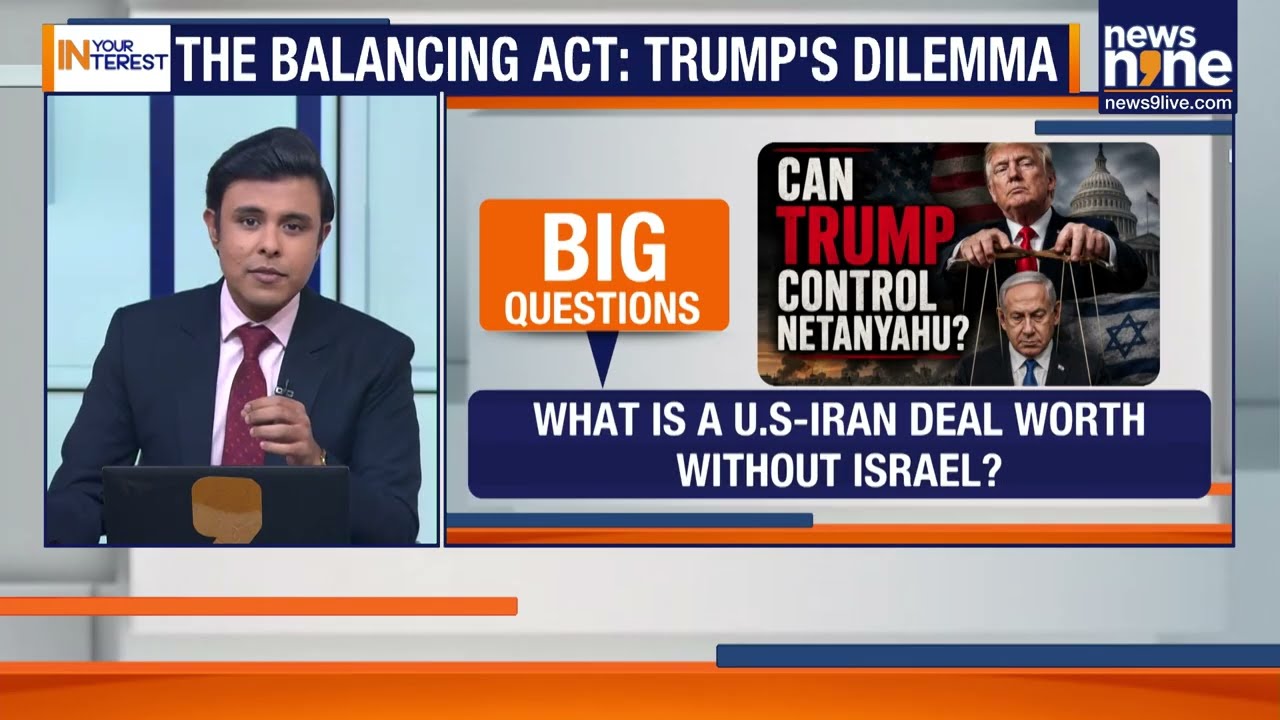
Israel Says 'NO' to Trump's Iran Deal | Peace Deal or Middle East Powder Keg?
NEWS9LIVE
365 views•2026-06-15

Iran emerges stronger, Israel more isolated after war, analysts warn
aljazeeraenglish
65K views•2026-06-14



