International nuclear agreements with rogue states often contain structural flaws where the state receives upfront economic benefits while failing to implement promised nuclear restrictions, as demonstrated by the US-Iran deal which critics argue provides Iran with sanctions relief and economic concessions without guaranteeing the opening of the Strait of Hormuz or preventing Iran from rebuilding its nuclear program and proxy networks.
Install our extension to search inside any video instantly.
Trump's Iran Deal Under Fire: John Bolton Warns Nuclear Threat Isn't Over | World News
Added:Well, I think the the deal is very favorable to Iran and the the one issue that mattered most to Trump, which is opening the Strait of Hormuz, whether Iran tries to charge tolls, for example, or imposes other conditions on maritime traffic. This agreement does not prohibit that. I think Trump had put himself in a very difficult position. It was clear he wanted out of the war. He's worried about the price of gasoline in the United States.
>> So, Mr. Bolton, thank you very much for speaking with A&I. I'll begin by asking you, of course, on the USA-Iran deal.
The signing was done yesterday in Versailles.
The leaders of the United States and Iran have signed a 14-point memorandum, which has also been released by the Iranian president. From the US point of view, the deal leaves a lot to be desired. Washington is giving up a lot for very little in return.
How do you, as as former national security adviser for President Trump, what are your views on the deal, sir?
>> Well, I think the deal is very favorable to Iran and the the one issue that mattered most to Trump, which is opening the Strait of Hormuz, is not fully resolved by this deal. I mean, we'll see what happens.
We'll see whether Iran tries to charge tolls, for example, or imposes other conditions on maritime traffic. This agreement does not prohibit that. I think Trump had put himself in a very difficult position. It was clear he wanted out of the war. He's worried about the price of gasoline in the United States.
He wanted to release more Gulf oil into international markets to get global prices down and therefore the price in the United States and he didn't really care what he gave up to get it. And I think that's very evident in the generous terms that are provided to Iran, the restrictions that the US places on its own force deployments in the region and the restrictions that are placed on Israel purport to be placed on Israel by this deal. It's more than the Iranian regime ever could have hoped for.
>> Oh, yes. Mr. Bolton, critics have also said that this deal gives Iran sanction relief, access to frozen assets, and a strategic strategic breathing room in exchange for promises that are difficult to verify. In this in your view, sir, a repeat of the structural flaws of the JCPOA?
>> Well, exactly. What whether it's Iran or North Korea, these rogue states try to bargain on their nuclear programs in the same way. The first thing they say is give me a lot of tangible economic benefits up front.
And in return for those benefits down the road, I will agree to limitations on the nuclear program.
And time and time again when people have reached agreements, whether it's with Iran or North Korea, Iran and North Korea get the economic benefits, but somehow they just never get around to putting the restrictions on their nuclear program. I mean, we have bought this horse now five or six different times with Iran alone, and and Trump has just bought it again.
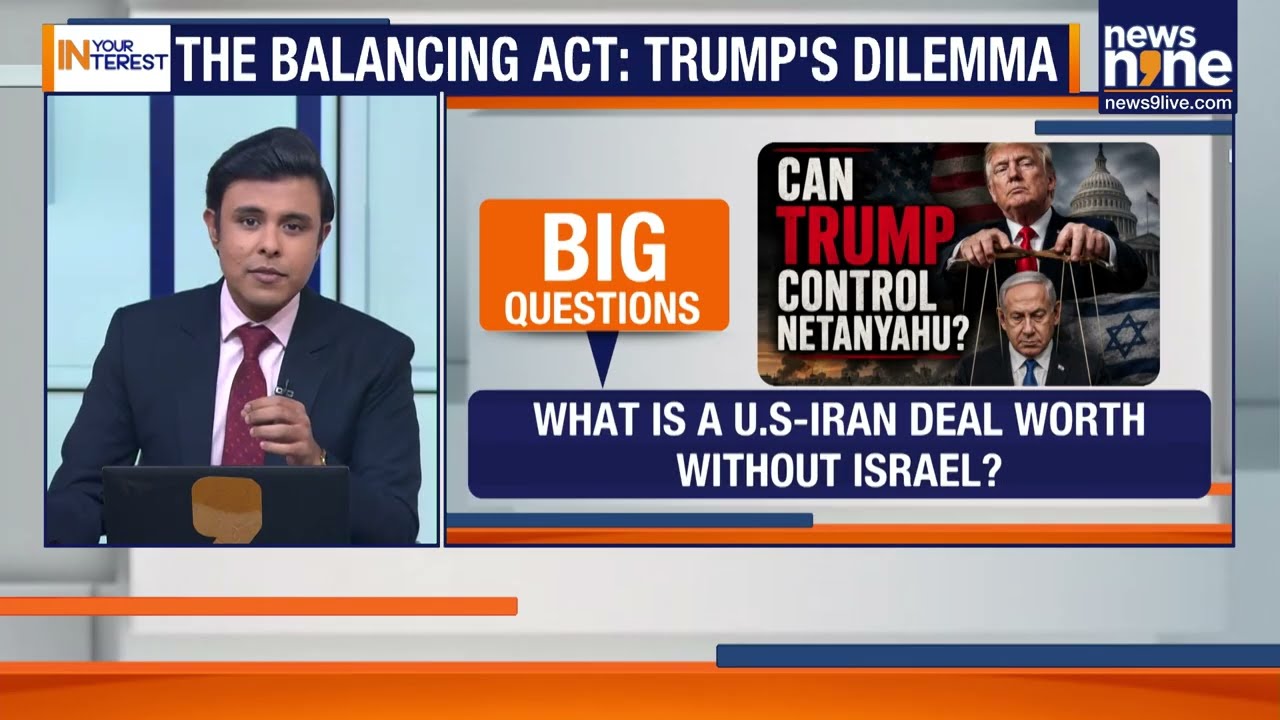
>> Mhm. And so, Israel, talking about Israel, now it has historically viewed any softening towards Iran with deep suspicion. Does this deal risk creating a strategic rift between Washington, Jerusalem, and also if Iran emerges economically stronger while retaining proxy influence in Lebanon, Iraq, and Yemen? Has the US effectively strengthened the very axis it sought to contain?
>> Well, I think the relationship between the US and Israel is stronger than than a mistake in this case by the president and the the resulting breach in the in the personal relationship between Netanyahu and Trump. We'll we'll see what happens here. Iran's performance is yet to come and know knowing Iran, I don't think that they're they're going to do anything to give people confidence that they'll meet any of the rest of the objectives stated in the in the memorandum.
The fact is that Iran was badly hurt by the US blockade which had stopped essentially all export of Iranian oil and therefore blocked all revenues to Iran that the regime desperately needs to stay alive.
Once it can sell oil again on the international markets which is effectively right now, that revenue stream will resume again and the regime will not use it for the benefit of the Iranian people. It will use to re-entrench itself in power, rebuild the revolutionary guard, rebuild the terrorist proxy network, rebuild the nuclear program and the threat that was posed when when the attacks began will simply appear again.
>> Also, Trump has said that the deal ensures Iran will not get a nuclear weapon. Do you trust Iran's commitments and in case this agreement collapses because we still have 60 days of negotiations, what are the likely next steps? Sanctions, covert action, or military confrontation?
>> Well, in terms of Iran's commitment, it doesn't mean anything. You know, Iran has committed multiple times in the past not to acquire or build its own nuclear weapons. It started in 1970 when it became a non-nuclear weapons state party to the nuclear non-proliferation treaty.
Now, that was under the Shah, but even after the 1979 revolution, the regime said time and time again it didn't want nuclear weapons and it committed to that most recently, I think, in the 2015 nuclear deal. It Iran is happy to say it it won't acquire nuclear weapons. It just is lying when it says it.
>> Mhm. So, talking about G7 now uh and India-USA relationship, yesterday after more than 1 and 1/2 years, Prime Minister Modi and President Trump met in person. They met on the sidelines of G7.
There were many topics that were discussed, uh including the Prime Minister also took the issue of, you know, the killing of Indian seafarers by the American strike. First of all, how what do you make out of that meeting and how important is India today in America's wider strategic calculus?
>> Well, it's not clear that very much constructive came out of it, any any deliverables, as as they say, but I do think it was important for Trump and Modi to meet again. Uh Trump has always believed he has a good personal relationship uh with Modi and uh I I am hoping that uh that that the trade issues, the tariff issues can be put behind us. I personally am opposed to Trump's tariff program. I think it's a big mistake uh around the world from the US perspective. It's been particularly unfairly applied uh to India much more so than to China. Uh and what I really hope comes of for uh the first time is a is a strategic uh discussion between Trump and Modi on on how to deal with the Chinese threat. It It always in the past in the first term and uh so far in Trump's second term it gets lost in a discussion of trade issues. I'm not saying trade is unimportant because it is important, but the strategic questions are more important and that's what those leaders should be focused on.
>> Mhm. Uh President Trump has increasingly spoken in terms of a G2 world suggesting that global stability may ultimately hinge in Washington and Beijing. Do you see that as a realistic recognition of geopolitical reality or a dangerous sidelining of allies and institutions like the G7?
>> Well, I think it's a it's a dangerous sidelining of India. I mean, I think I think China's aspirations for hegemony along the Indo-Pacific periphery is really the one of the major issues, if not the major issue of the 21st century, which is why it seems to me that closer relations between India and the United States are so critical. That could come in a variety of ways in bilateral projects and policies in the Asian security quad along with Japan and Australia, which I think is a very important institution. I wish we could make more out of it or in various other ways. And so it's a part of the problem is that Trump's focus is so heavily on trade almost all the time he speaks with foreign leaders. It's hard to get to anything else, but we can see what the China's approach has been in East Asia across the Taiwan Strait and the South China Sea. We know of the tensions along the line of actual control with India. Yeah, this problem isn't going away. It's getting bigger and we either address it together or we're going to have to address it separately, which is not ideal.
>> Mhm. So under President Donald Trump, how do you see the court grouping evolving? You know that India is the chair for this year's court. We even held the foreign ministers meeting and given Beijing's expanding footprint from the South South China Sea to the Indian Ocean, should the court now move beyond diplomacy into intelligence sharing or other things?
What are your views on court, sir?
>> Well, I think there are a lot of potential areas for cooperation that that that should be explored. I do think it has to go beyond diplomacy. And I think >> [clears throat] >> I think it's this is an opportunity to be creative.
We're not We're nobody's trying to use this to recreate NATO in the Asia-Pacific. It's It's a very different environment.
There there are multiple ways in which countries can cooperate, but I do think that that the quad is a unique combination. It was really the initially the idea of Shinzo Abe when he was prime minister of Japan, but but other leaders have taken it up and I think Prime Minister Takai Ichi who is a kind of follower was a follower of Shinzo Abe recognizes how important it is. I think the Australians do as well. So, I would hope that we could have meetings on many levels on among intelligence professionals with the militaries in in in many ways that would be helpful going forward. And I think there are others in the region that that that could be invited to participate in it as well at least for some activity. South Korea for example, Singapore. So, the more creative we are, the more flexible we can be and the more prepared in a variety of different areas to handle the kind of threat that that many people see emerging from China which thinks through its strategy very carefully, takes a long-term perspective and and has a plan it's working on. We need something in response to that.
>> Mhm. And how do you look at US's policy when it comes to the Russia-Ukraine war because President Trump has been saying that I I had always thought that this would have been the easiest war to solve.
>> Well, he he course was wrong about that and he didn't solve it in 24 hours either. The G7 declaration on the Ukraine war I thought was very good. I think many people were surprised that Trump signed on to it because it reflects a very strong expression of support for Ukraine. That I think is where the great majority of the American people are. Trump may have been skeptical of Ukraine, but I think in Congress and in the general population there's enormous support for Ukraine.
They're defending their territory against unprovoked aggression by Russia.
And they've got a lot of they've learned a lot of lessons in Ukraine that can be beneficial to the rest of us. They by dint of battlefield necessity have developed some of the best cyber warfare capabilities in the world. And many people believe that the Ukrainian army today is one of the best in the world overall, certainly the best in Europe.
So, it's there's there's a lot to be gained by supporting Ukraine and I think you know, more people should should should should be helping out. I certainly hope the US role in that regard increases. We'll see.
>> Mr. Bolton, just last question, sir.
Since you have closely worked with Trump and also on Iran, if you were sitting in the situation room today, would you advise President Trump to walk away from this deal or use the next 60 days to harden it dramatically?
>> Well, you know, he signed it. That's that's a mistake. I you know, you can't correct that now, but what I would insist is on absolutely strict performance by Iran. And I would focus because the issue of the Strait of Hormuz is the center of this deal.
I would I would focus on Iran meeting its international legal obligations. A lot of people like to take that as the standard. And you know, the Strait of Hormuz is an international waterway. And that means whether you're a party to the law of the sea treaty or not, there is a right of innocent passage through the strait for all commercial vessels. That means no tolls, no restrictions.
There's no exercise of sovereignty over that right of innocent passage, not by Iran, not by Oman, not by any of the littoral states of the Gulf. And if Iran varies from that conduct, which was which was the kind of conduct all the Gulf nations engaged in before the war, then I think the deal's off. That's what I'd advise him.
>> Mhm.
Related Videos
126 .bikey6
mikey.bikey6
572 views•2026-06-16

Tamil Nadu Assembly | "இருமொழி கொள்கை பின்பற்றப்படும்" | Governor Arlekar | 2 Language Policy
News18Tamilnadu
558 views•2026-06-18
Rep
RobSmithOnline
3K views•2026-06-15
Cross-Voting Hits INDIA Bloc As NDA-Backed Nathwani Wins Jharkhand Seat, ZPM Makes Rajya Sabha Debut
cnnnews18
283 views•2026-06-19
WHILE TRUMP BEGGED CHINA FOR HELP — CHINA WAS SECRETLY ARMING IRAN BEHIND HIS BACK
Frumreporttwo
219 views•2026-06-18

The U.S. Iran 14 Point Memo of Agreement... What's REALLY Happening...
J.S.Candid
4K views•2026-06-17
Israel Says 'NO' to Trump's Iran Deal | Peace Deal or Middle East Powder Keg?
NEWS9LIVE
365 views•2026-06-15

Iran emerges stronger, Israel more isolated after war, analysts warn
aljazeeraenglish
65K views•2026-06-14



