This video analyzes how Ben Shephard's intense, persistent questioning of Keir Starmer during a This Morning interview about the government's proposed social media ban for children created a more engaging and accountable political discourse, demonstrating that morning television can serve as a platform for genuine political accountability when presenters move beyond comfortable conversational setups to pursue substantive, detailed questions that challenge politicians to explain practical implementation rather than just political vision.
Install our extension to search inside any video instantly.
Nation Reacts! Ben Shephard's Intense Interview With Keir Starmer Sparks Debate
Added:There was a moment during that interview where the air in the studio seemed to shift. Not dramatically, not with raised voices or pointed accusations, but in that quieter, more unsettling way that only happens when someone is being asked something they genuinely weren't prepared to answer so directly.
Ben Shephard has spent years on British television. He knows how to hold a room.
He knows the difference between asking a question and pressing one. And when Keir Starmer sat across from him to discuss the government's proposed social media ban for children, what viewers got wasn't a comfortable political appearance.
It was something far more interesting than that. The topic itself already carried weight before a single word was spoken.
Social media and young people, it's one of those subjects that touches almost every family in Britain right now.
Parents worried about what their children are seeing online. Teenagers growing up in a world that moves faster than any generation before them could have imagined.
And a prime minister trying to position a policy announcement as protection rather than control.
That tension was already in the room before the cameras rolled. What many viewers noticed almost immediately was the way Ben approached the questioning.
There was none of that soft conversational setup that political guests sometimes receive on morning television. The kind designed to ease someone in gently before anything substantive gets raised.
Instead, the questioning moved with a kind of quiet urgency. The sort that suggests the presenter has thought carefully about what actually matters here, not just what makes for pleasant viewing at breakfast time.
And Starmer, for his part, arrived clearly prepared. Politically composed, measured. But there's something fascinating that happens when a politician meets a line of questioning that keeps returning to the same fundamental point, the detail.
Not the vision, not the ambition, not the headline, the practical reality of what this ban would actually look like, how it would work, and who would be responsible when it doesn't.
Some people watching felt that in those moments of follow-up questioning, something shifted in Starmer's delivery.
Not a loss of composure exactly, he's too experienced for that, but perhaps a slight recalibration.
The kind you notice when someone is genuinely working through an answer rather than simply delivering one they already rehearsed.
The social media ban itself is the kind of policy that sounds instinctively reasonable the moment you describe it.
Protecting children online, limiting harmful content, giving parents more control. Most people hearing that summary would not along, but the moment you begin asking how, how platforms enforce it, how age verification actually works, how you stop a determined teenager from simply finding another way, the conversation gets considerably more complicated.
And that's precisely where Ben kept returning. Not aggressively, not with the kind of combative energy that turns a political interview into theater, but with that particular form of journalistic persistence that actually serves viewers rather than performing for them. The quiet insistence that the question hasn't been fully answered yet.
Viewers online interpreted the exchange as something more than a standard political segment.
There was a sense, reading through reactions afterward, that people felt genuinely engaged rather than simply informed.
That's not something that happens often during morning television political interviews, which can sometimes feel like scheduled appearances rather than real conversations. What made this feel different, at least to the people who kept talking about it afterward, was the atmosphere of genuine accountability.
Not hostility, not point scoring, just the honest expectation that if you're announcing a significant policy that affects millions of families, the questions that follow should be proportionally serious.
There's also something worth exploring in the choice of platform itself. Good Morning Britain and This Morning occupy a particular space in British television culture.
They're not political programs in the traditional sense. Their audiences include people who wouldn't necessarily choose to watch a formal political debate or a lengthy news interview.
But they're watching breakfast television with their coffee and suddenly they're getting real questions about real policy.
That reach matters. It changes who gets to participate in the conversation. Some audiences began wondering whether this interview would mark a shift in how morning television handles political guests going forward, whether the expectation of genuine engagement rather than managed appearances might become a standard viewer start to demand rather than simply appreciate when it happens.
It almost seemed as though the moment captured something larger than itself.
A public that is exhausted by policy announcements without policy detail. A media environment where people are increasingly attuned to the difference between a politician speaking and a politician actually explaining.
And a presenter willing to represent that exhaustion honestly rather than diplomatically.
What lingered after the segment ended wasn't really about social media at all.
It was about something quieter. The expectation that the people making decisions affecting daily life should be willing to sit in the discomfort of detailed, patient questioning and that the people asking those questions should feel confident enough to keep going.
Maybe that's why people were still discussing this hours after it aired.
Not because anything explosive happened.
Not because anyone lost their temper or said something they'd regret, but because it felt, for a few minutes, like a conversation that was actually trying to get somewhere.
And sometimes, in an era where so much television feels carefully managed from start to finish, that attempt alone is enough to make something genuinely memorable.
If you noticed something during that interview that caught your attention, a moment, a pause, a question that made you think, I'd genuinely love to know what it was.
Leave it in the comments below.
Related Videos
126 .bikey6
mikey.bikey6
572 views•2026-06-16

Tamil Nadu Assembly | "இருமொழி கொள்கை பின்பற்றப்படும்" | Governor Arlekar | 2 Language Policy
News18Tamilnadu
558 views•2026-06-18
Rep
RobSmithOnline
3K views•2026-06-15
Cross-Voting Hits INDIA Bloc As NDA-Backed Nathwani Wins Jharkhand Seat, ZPM Makes Rajya Sabha Debut
cnnnews18
283 views•2026-06-19
WHILE TRUMP BEGGED CHINA FOR HELP — CHINA WAS SECRETLY ARMING IRAN BEHIND HIS BACK
Frumreporttwo
219 views•2026-06-18

The U.S. Iran 14 Point Memo of Agreement... What's REALLY Happening...
J.S.Candid
4K views•2026-06-17
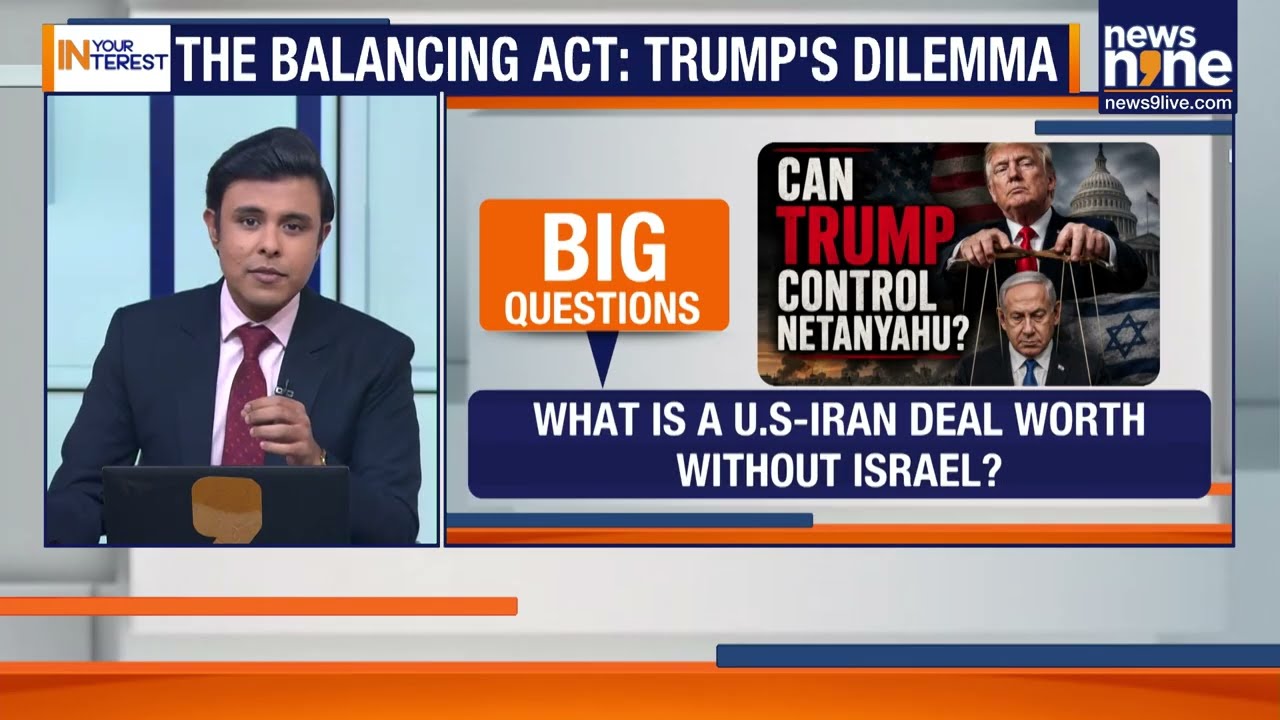
Israel Says 'NO' to Trump's Iran Deal | Peace Deal or Middle East Powder Keg?
NEWS9LIVE
365 views•2026-06-15

Iran emerges stronger, Israel more isolated after war, analysts warn
aljazeeraenglish
65K views•2026-06-14



