I Mixed Vodka With Milk So You Don't Have To
Mixing beer or wine with milk is not toxic, but it causes curdling due to the acidity of wine (pH 3.0-4.0) and carbonation in beer, which denatures casein proteins in milk, causing them to clump...
Alcohols, phenols, and ethers are classified based on the position of the hydroxyl (-OH) group: alcohols have the -OH group attached to a saturated carbon atom, phenols have the -OH group attached directly to an...
Volumetric analysis (titration) is a quantitative analytical method used in industry to determine the amount of a substance by measuring the volume of a solution of known concentration (titrant) required to react completely with the...
Pool technicians avoid Leslie's Chlor Brite because it contains cyanuric acid (stabilizer) that accumulates over time and reduces chlorine's sanitizing effectiveness even when test strips show normal readings; instead, they use calcium hypochlorite (no stabilizer),...
Bond energy is defined as the minimum amount of energy required to break one mole of a covalent bond in the gaseous phase. The enthalpy change of a reaction can be calculated using bond energies...
The Victorian LeclanchΓ© cell is a zinc-carbon battery consisting of a glass jar containing an electrolyte of sal ammoniac (ammonium chloride) and water, with a zinc rod as the negative electrode and a carbon rod...
Markovnikov's rule applies only to asymmetric alkenes and alkynes, stating that when adding HBr to an asymmetric alkene, the hydrogen atom adds to the carbon with more hydrogen atoms, while the bromine adds to the...
Gravimetric analysis is a primary quantitative analytical technique that determines the amount of a substance by converting it into a stable compound with definite chemical composition, then measuring its mass through stoichiometric calculations; the method...
Natural water sources can contain nitrates, which are chemical compounds that may vary in concentration over time and require testing to ensure water safety for consumption.
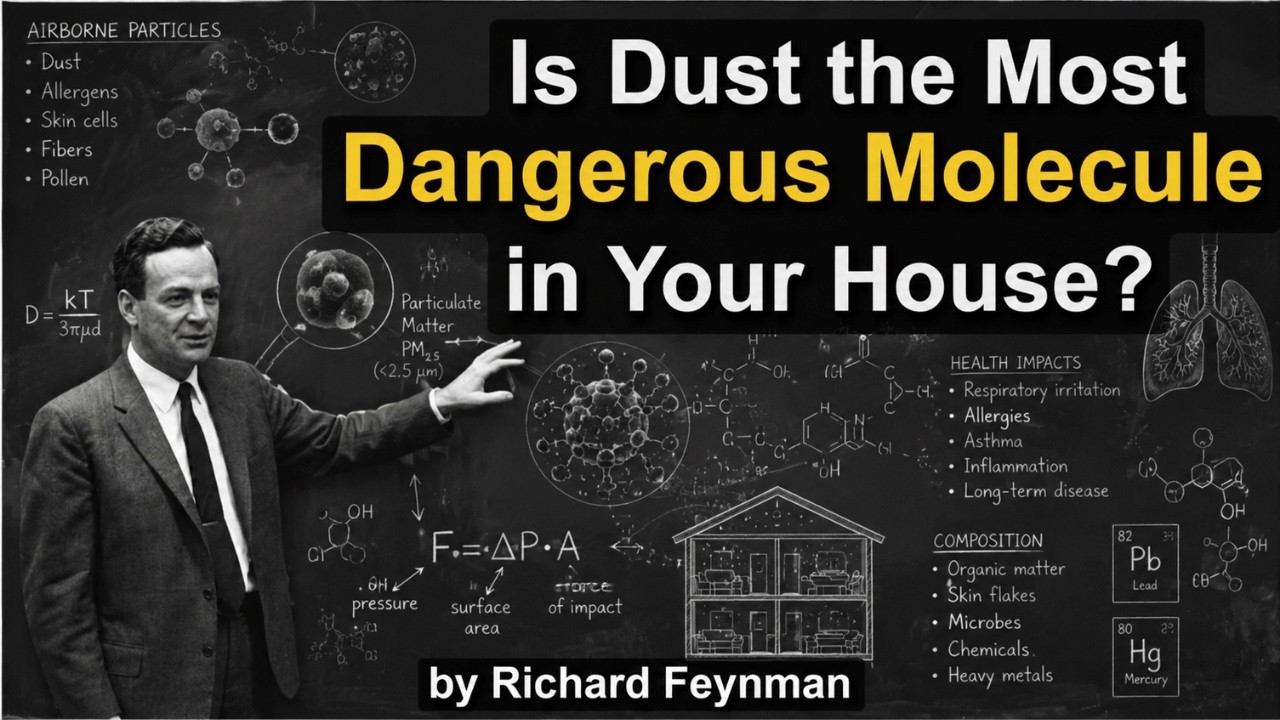
Household dust is not merely dead skin and dirt but a 'chemical sponge' that actively absorbs toxic compounds like plasticizers, flame retardants, and heavy metals from furniture, electronics, and flooring through electrostatic attraction; the smallest...
The mass lost during the drying process of a sample represents the water content, as water evaporates when heated, leaving behind the dry solid material; this principle is fundamental in food science for determining moisture...
Chromatography is an analytical technique that separates chemical mixtures by passing them through a stationary phase with the aid of a mobile phase, where components move at different speeds based on their varying affinity for...
Gravimetric analysis is an analytical chemistry method that determines the amount of an analyte by converting it into a stable, weighable precipitate; in food testing, phosphate (PO4Β³β») is precipitated using magnesium-containing reagents, filtered, dried, and...
This video demonstrates stoichiometric calculations for determining elemental composition and molecular formulas. For copper sulfate (CuSO4, molar mass 159.5 g/mol), 100g contains 39.81g of copper (63.5/159.5 Γ 100). For an iron oxide with 69.9% Fe...
A mixture is a combination of two or more substances where each pure substance retains its individual chemical properties. Mixtures are classified as homogeneous (uniform composition throughout, like solutions) or heterogeneous (non-uniform composition with visible...
Gravimetric analysis is a quantitative chemical technique that determines the amount of an analyte by converting it into an insoluble precipitate, which is then filtered, dried, and weighed to calculate the original concentration. In this...
In food chemistry, the acidity of pickled products can be measured using pH meters (which measure hydrogen ion concentration) and acid-base titration (which measures total titratable acidity). The video demonstrates how chili asam boi pickled...
Titration is a quantitative analytical technique that determines the unknown concentration of a substance by reacting it with a reagent of known concentration until reaching the stoichiometric equivalence point, where the reaction is complete; in...
Action figures are made from three essential plasticsβABS (hard, rigid torso that yellows and becomes brittle from UV exposure over 5-15 years), PVC (flexible appendages that become sticky due to plasticizer leaching), and POM (super...
Gases play a crucial role in human civilization, from the Haber-Bosch process that enabled synthetic fertilizer production (now responsible for 50% of nitrogen in our bodies) to the discovery of helium in the sun before...
Electrolysis is the decomposition of compounds by passing electric current through them, where electrolytes (ionic compounds in solution or molten state) allow current to pass while decomposing. In water electrolysis, acidified water increases conductivity, with...
This video provides solutions for Class 10 Science Chapter 14 on Classification of Elements, covering exercise questions and answers in both English and Nepali languages to help students understand the systematic organization of chemical elements.
This video provides solutions to NEET UG 2026 Re-Exam Chemistry questions (46-50), covering: (1) Friedel-Crafts acylation reaction of benzene with acyl chloride using AlCl3 catalyst, followed by reaction with NaOCl to form carboxylic acid products;...
Colligative properties are solution properties that depend only on the number of solute particles, not their identity, including vapor pressure lowering, boiling point elevation (ΞTb = Kb Γ m), freezing point depression (ΞTf = Kf...
Toothpaste is neither a solid nor a liquid; it is a semi-solid paste that contains water, fluoride, and sweeteners, which gives it properties of both states of matter. It flows when pressure is applied but...
Iodometric titration is a quantitative analytical method used to determine vitamin C content in orange juice by exploiting the reducing property of vitamin C, which reacts with iodine to convert it to iodide ions; the...
Snap pops (also known as estalinho, biriba, or traque) are manufactured using silver fulminate, a highly sensitive explosive compound created by reacting silver with nitric acid to form silver nitrate, which is then reacted with...
Chromatography is a chemical technique that separates mixtures based on how components interact with a stationary phase (like paper) and a mobile phase (like water), allowing scientists to identify ingredients in products like lipstick, analyze...
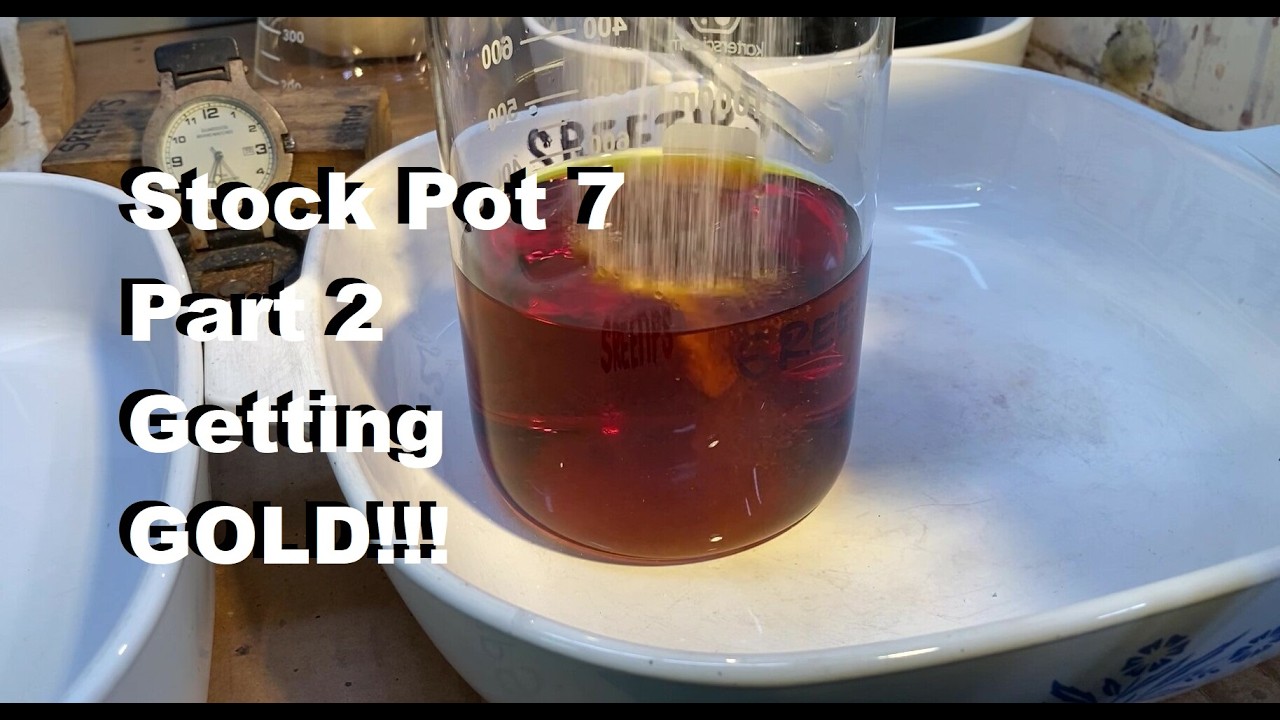
This video demonstrates the process of recovering gold from stockpiles by dissolving base metals with nitric acid, then precipitating pure gold using sodium metabisulfite (SMB), which reacts with excess nitric acid to form a gold...
This video is a live online class session for 10th-grade students covering Physical Science Chapter 1, where the teacher guides students through important questions on chemical reactions, including identifying oxidizing agents, balancing chemical equations (such...
The detection of organic carbon (macromolecular carbon) in Martian rocks by NASA's Perseverance rover in the Jezero crater provides potential evidence for ancient microbial life, but organic molecules can also form through non-biological chemical processes,...
Fireball formation requires three elements: oxygen, a combustible material, and an ignition source. In the MythBusters experiment, a stun gun provides the ignition spark, flammable pepper spray serves as the fuel, and synthetic fabrics like...
Ascorbic acid (vitamin C) in orange juice can be quantified through iodine redox titration, where ascorbic acid acts as a reducing agent and iodine as an oxidizing agent in a 1:1 molar reaction; the endpoint...
Ultra-processed foods are industrially engineered substances designed to override the body's natural satiety signals through precise combinations of sugar, salt, fat, and additives, creating a global addiction crisis. The food industry exploits regulatory loopholes like...
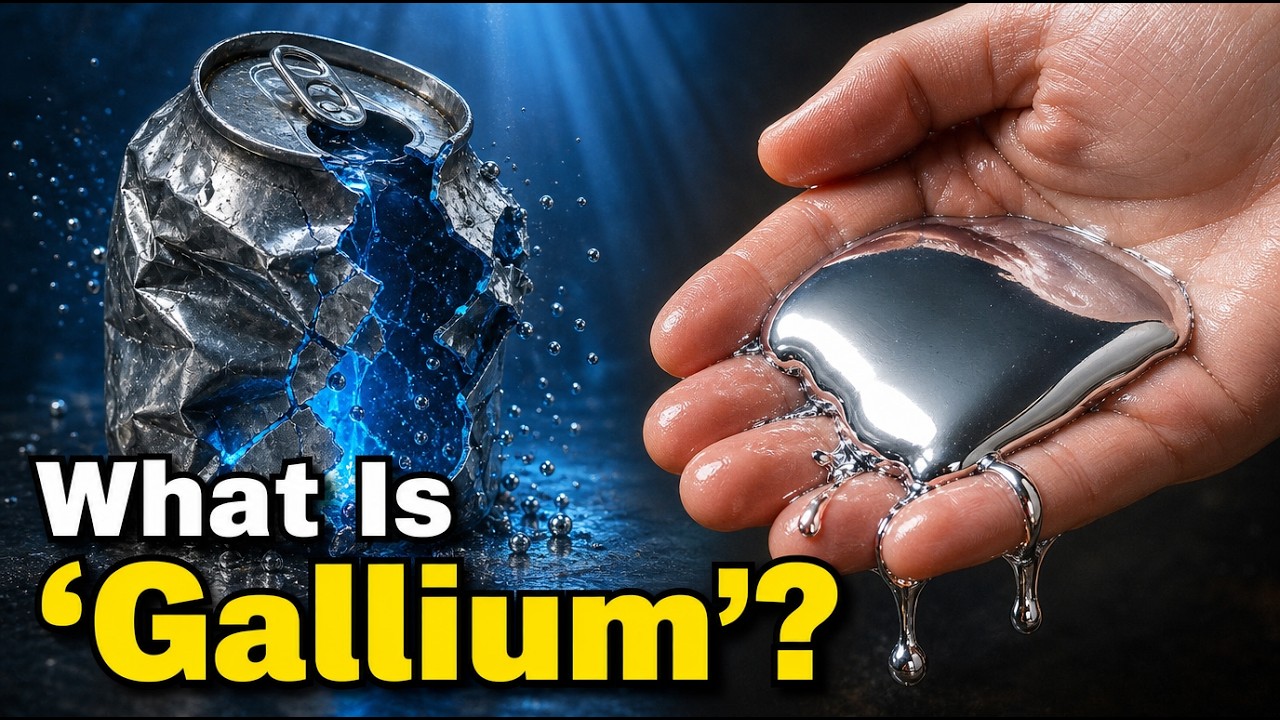
Gallium is a naturally occurring metal with a melting point of 29.7646Β°C, meaning it melts in the palm of your hand at body temperature; it can destroy aluminum through liquid metal embrittlement by penetrating the...
Matter is classified into solids, liquids, and gases based on particle arrangement and attraction forces. Pure substances have uniform composition with identical particles, while compounds form when atoms of different elements combine chemically in fixed...
Raoult's Law states that the vapor pressure of a solution containing a nonvolatile solute is equal to the mole fraction of the solvent multiplied by the vapor pressure of the pure solvent (P_solution = Ο_solvent...
A solution is a homogeneous mixture of two or more substances in a single phase, consisting of a solute (substance being dissolved) and a solvent (dissolving medium). Solutions can exist as gases, liquids, or solids,...
When ferrous sulfate (FeSO4) is heated, it undergoes a decomposition reaction where the water of crystallization evaporates, causing a visible color change from greenish to reddish brown, demonstrating how thermal energy can break down chemical...
High base fog in film development can be controlled by selecting developers with lower alkalinity and gentler reducing agents, or by adding chemical restrainers like benzo triazol; for example, D23 developer produces only 0.11 base...